Newsletters
December 2014 - Elderberry, Rosy Maple Moth
WELCOME TO GREEN FUTURES !
DECEMBER, 2014
“By the time we see that climate change is really bad, your ability to fix it is extremely limited. The carbon gets up there, but the heating effect is delayed. And then the effect of that heat on the species and ecosystem is delayed. That means that even when you turn virtuous, things are actually going to get worse for quite a while.”
- Bill Gates
“The greatest power of bureaucracies is to make the smart act stupid and the good to act evil.”
- Raul Ramos y Sanchez
MERRY CHRISTMAS/HAPPY HOLIDAYS!!!
Like almost everyone else we are busy with the holidays so we will save this month's environmental news and views for next month. We completed a PowerPoint presentation on the Southeastern Massachusetts Bioreserve that we expect to email out shortly. Watch for it.
BIORESERVE FLORA OF THE MONTH – Black Elderberry (Sambucus nigra/canadensis)
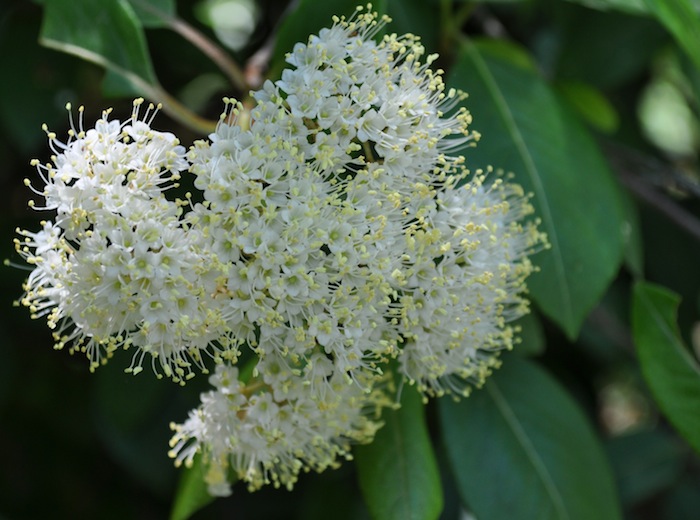
Elderberry grows as a leggy shrub in moist soil along woodland edges, open wetland borders, along the sides of country roads and on disturbed ground in full sunlight. Elderberry grows to a height of eight feet and grows as a multi-stemmed shrub often forming thickets. Oval leaves are dark green and arranged in opposite pairs, pinnate (having leaflets arranged on either side of the stem, typically in pairs opposite each other) with serrated edges. The leaves are deciduous.
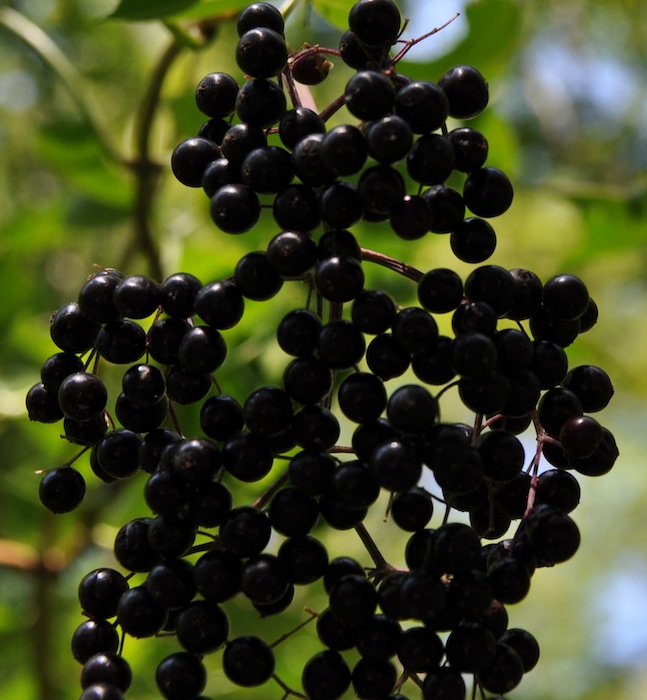
Elderberry blooms abundantly, if in full sunlight, in early summer. The large floral umbels or corymbs (flower clusters whose lower stalks are proportionally longer so that the flowers form a slightly convex head), up to a foot in diameter, are white and very fragrant attracting bees and many other insect pollinators. The berries that form after pollination are small and green. They slowly ripen, over summer, into the large purple-black clusters we see covering the shrubs in late August through September.
Black elderberries are native to eastern North America. Due to interest in the food and medicinal value of elderberries they have been widely transplanted and there are many cultivated varieties. They can now be found growing just about everywhere in North America.
The flowers and ripe berries are edible, high in vitamin c, but other parts of the shrub ...leaves, twigs, bark, stems, roots ...are poisonous, containing alkaloids and glucosides that can contain hydrocyanic acid.
The flower clusters can be steeped to make a fragrant “tea” and they can also be fermented and made into wine. And, they can be eaten. Here's what Euell Gibbons had to say about that in his classic wild foods foraging book, Stalking the Wild Asparagus: “These flowers are called Elder Blow, when used in culinary arts, and some of my friends think this is the finest product of the elder. Gather the umbels at the very height of bloom, remove the coarse stems and dip the clusters in a batter made of 1 cup of flower, I tablespoon of sugar, 1 teaspoon of baking powder 2 eggs and a ½ cup of milk. Fry the dipped clusters in deep fat, heated to about 375 degrees for approximately 4 minutes or until they are a golden brown. Place them on a paper towel, squeeze a little orange juice over them, then roll in granulated sugar, serve while piping hot and watch them disappear.”
The berries themselves have a myriad of uses. The ripe berries, each containing three to five seeds, are bland and insipid when eaten raw. Cooking changes that. The berries can be used in jams and jellies, pies, sauce, syrup, juice, medicine and for dye. They can also be dried. The stems of elderberry have a soft pithy center. A piece of stiff wire or section of wire clothes hanger can be shoved through to remove the soft pith from the stem so the stems can used for spouts/spiles, flutes, whistles, peashooters and similar toys.
Although we've never used elderberry for this, we've been told by a bird fancier that hollowed out fresh stems, used as perches in bird cages, will rid small domestic birds, such as parakeets, finches and canaries, of lice. Reportedly, while perched and preening, lousy birds will displace lice which, if they cannot immediately get back on the bird, will seek shelter in the hollowed-out elderberry perch and be killed. If anyone has lousy birds and tries this, let us know if it works.
Elderberry fruits and seeds are consumed by many wildlife species. Most of our summer songbirds eat them and so do ruffed grouse and many of our winter birds such as jays, nuthatches and woodpeckers. Rodents, including squirrels, also feed on the berries and seeds. Deer, rabbits and hare tend to shun the toxic foliage and bark.
Elderberry seeds not consumed by wildlife can lay dormant in the soil for many years until scarified by fire. Should the forest be swept by wildfire and clearings created, dormant elderberry seeds will be some of the first to sprout and reclaim the land.
BIORESERVE FAUNA OF THE MONTH – Rosy Maple Moth (Dryocampa rubicunda)
Like the Io moth, our July 2012 Bioreserve Fauna of the Month http://gf.gareworks.com/?content=NcysuM6MLenN3QmV, the rosy maple moth is also a member of the family Saturniidae. Members of this family are the largest and showiest moths here in New England.
The rosy maple moth is probably our most common Saturnid and also our smallest. The rosy maple has a wingspan of only 1 ½ to 2 inches, but is very easy to identify due to its bright, deep yellow, fuzzy body and candy-pink wing markings, underside and legs. The antennae are yellow. Males have larger, bushier antennae than females. Females are more robust with stout bodies and a wider wingspan.
Rosy maple overwinter as pupa underground. The adult moths start to appear in late May. Like other Saturniidae they do not feed as adults. All their energy is directed toward finding mates and laying eggs. In the evening males use their large antennae to detect pheromones given off by receptive females who remain stationary on a tree trunk or limb. Following the pheromone trail leads the male to the waiting female. They immediately mate and the next evening the female will begin laying eggs, ten to thirty, in clusters on the underside of maple leaves.
Eggs hatch in about two weeks and the striped caterpillars, called green-striped mapleworms, stay together and feed as a group on maple leaves, occasionally on oak. In their foraging, as they grow older, the caterpillars slowly distance themselves from their siblings.
At the end of the summer, the caterpillars leave the tree and burrow underground where they shed their skin becoming pupa. The pupa remain underground through the winter and emerge as adult rosy maple moths in the spring.
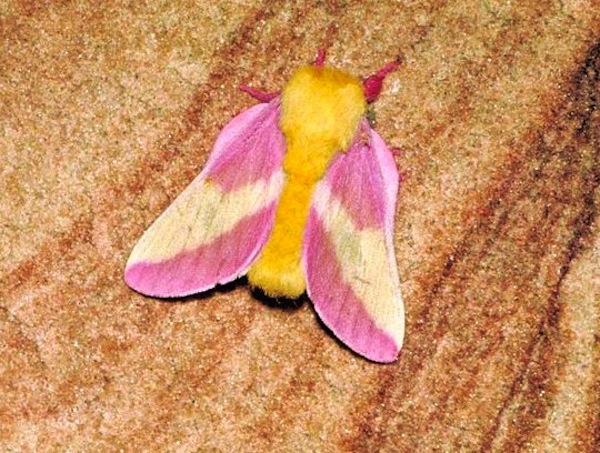
Photo – US Fish and Wildlife Service
HOW DID IT GET SO LATE SO SOON? IT'S NIGHT BEFORE ITS AFTERNOON.
DECEMBER IS HERE BEFORE IT'S JUNE. MY GOODNESS HOW THE TIME HAS FLEWN.
HOW DID IT GET SO LATE SO SOON?
Dr. Seuss needn't worry. More daylight is coming soon. We've received reports the Sun is getting tired of the Southern Hemisphere and thinking of making a big move north this month. More daylight starting December 21, 2014 at 6:05 p.m.
Click on our Calendar and take advantage of all the winter things to do this season before the Sun returns.
<Back
Social