Newsletters
October 2010 - Casino
WELCOME TO GREEN FUTURES!
OCTOBER, 2010
The first rule of sustainability is to align with natural forces, or at least not try to defy them.
- Paul Hawken
No face which we can give to a matter will stead us so well at last as the truth. …Say what you have to say, not what you ought. Any truth is better than make-believe.
- Henry David Thoreau
FLANAGAN IS NO PROGNOSTICATOR - “Flanagan predicted the suit will not fly.”
Well, it appears the “suit” had wings ...and we might add that Flanagan is not much of a mayor either!
The following is from The Herald News by Michael Holtzman Staff Reporter -
Supporters of the plan to develop a SouthCoast biomanufacturing park — and not a casino — have reason to celebrate.
A Superior Court judge in New Bedford Thursday afternoon approved a temporary injunction restraining the city and Redevelopment Authority from the land sale and option agreement that could lead to developing a destination resort casino with the Mashpee Wampanoag tribe.
“The court concludes that the issuance of a preliminary injunction does not affect the public interest adversely and, in fact, promotes the public interest,” Judge Robert T. Moses wrote in his eight-page decision.
Moses further stated his belief the transaction promoted by Mayor Will Flanagan and approved on the Redevelopment Authority’s 3-1 vote last week violates state competitive bidding laws because the land sale is greater than $25,000.
A “Ten Taxpayer Group” of city residents that included the chief of the Pocasset Wampanoag tribe, Edward Page of 32 Tobin St., filed suit Tuesday on grounds the Redevelopment Authority’s $4.7 million sale of 45 acres with an option to buy about 200 more, totaling $21 million, violated a prior state agreement to develop the South Coast BioPark.
Moses agreed. “The language contained within the Bioreserve Act is compelling,” he wrote. “Barely a year after the subject premises were conveyed to the (Fall River Redevelopment Authority), it seeks to transfer the same in contravention to the stated purpose of the act and in disregard of the stated basis for the subject transfer of the parcel to it.
“The transaction is contrary to the spirit and intent of the Bioreserve Act,” Moses said. That act details the Redevelopment Authority developing this land between Route 24 and the Freetown State Forest for commercial, industrial and other purposes agreed upon in the 2009 sale, with restrictions it may not be used as a casino or landfill.
The city’s intention in selling the land to the tribe has been to legislatively remove that restriction to allow gaming.
Somerset attorney Lesley Rich, on behalf of the plaintiffs, said allowing the sale to proceed meets the statute requirement that it would “do irreparable harm.” It also should require approval by city government agencies beyond the Redevelopment Authority and mayor’s office, he said.
“I’m just speechless. I’m really happy. I think the judge gave it thought and considered all the factors,” said Rich, who also represents the Pocasset tribe that’s behind the suit.
Moses approved the preliminary injunction following a hearing on the motion with both sides on Tuesday.
Rich called the judge’s initial ruling “a slam dunk, adding, “It’s a clear indication the city should recognize that what it did was wrong, and call it a day.”
It was also clear Flanagan had no such intention — less than an hour after Rich paid a $90 court fee and delivered the judge’s finding to him at Government Center.
“No, I don’t see this as a significant setback. I see this as a war on jobs,” Flanagan said.
He listed his often-stated position that 4,500 permanent jobs and 1,000 construction jobs would be created by the proposed multifacted casino resort to lift the burden of the city’s 13 percent unemployment rate and struggling economy.
Flanagan had Corporation Counsel Steven Torres and Fall River Office of Economic Development head Kenneth Fiola with him in his office to refute Moses’ opinion and state their next moves.
Flanagan said he’s instructed the Redevelopment Authority’s consulting Providence lawyers to immediately consider an appeal of the temporary injunction while his administration “regroups and starts strategizing how we can move forward.”
“If we are denied at the appellate level, we will work within the laws to get this project done,” Flanagan said.
Flanagan, along with Fiola and Redevelopment Authority Chairman William Kenney — who left the city and had not been officially apprised of the decision Thursday night — said they respected Moses’ position but disagreed with his finding.
“There is no transfer in contravention to the (biorserve) act. The act remains in effect with a new owner,” Kenney said. “That new owner is either going to get that act modified or we (the Redevelopment Authority) are going to buy back the land.”
The Mashpees, a federally recognized tribe, designated “Project First Light” as a corporate entity it would operate under the purchase and sale and option agreement the Redevelopment Authority lawyers made public for the first time Tuesday in response to the court complaint.
Kenney said he “disagreed with the judge’s decision” for other reasons. He questioned how Moses could echo and reference an advisory opinion by the state inspector general that the land sale required a competitive bidding process under Massachusetts General Law Chapter 30B, Section 16.
“This is what redevelopment authorities are supposed to do. I never heard of a redevelopment authority having to put everything out to bid,” Kenney said.
He emphasized Moses’ order is temporary. “It’s just a preliminary order to slow down. It’s not a final decision,” Kenney said.
“It’s not the end of the world, but it doesn’t help,” said Kenney, who voted against the sale but supports the Redevelopment Authority and mayor’s plan as a critically needed job builder.
“I disagree with his findings that 30B needs to be followed in this situation,” Fiola said of the order in a separate interview.
Fiola said Project First Light was buying the land “in accordance with all existing restrictions and zoning. They could not move forward until the deed restriction is lifted,” he said.
Fiola said he believes Moses incorrectly tied in the requirement for competitive bids with the Bioreserve Act requirements.
He objected to Moses’ opinion the sale violated “the spirit” of the act. He noted the state Senate and House voted for casino gambling and Gov. Deval Patrick offered an alternative gaming proposal, each of which included lifting the city’s casino deed restriction.
The legislation failed this summer when a compromise bill could not be reached.
Torres said of a possible appeal, “It’s not unusual for an appeals court to overturn a judge’s decision. It happens all the time. That’s why there’s appeals courts.”
Such an appeal, would be based, said Flanagan, a lawyer, “on the judge’s application of the rule of law to the facts. It’s the application we’re in disagreement with.”
Rich, who had filed an expanded brief Thursday after the Redevelopment Authority made the contract agreements with the Mashpees public, called the deal “fiscally irresponsible.” He based that, he said, on gaming not being legal and the state not setting the rules on how it would operate.
He also said an urban redevelopment plans that resulted in the Bioreserve Act was approved by the City Council. Rich said he believes that should have been done with this sale, and discussed the issue recently with council Vice President Linda Pereira.
“You don’t sell something that isn’t ready to be sold,” he said.
Rich said he was also working in his role as Pocasset Wampaoag tribe attorney. He said “there is no argument” about the Mashpees not having territorial historical rights in Fall River and this area. He said Chief Edward Page “doesn’t want the Mashpees in Pocasset territory without coming to the Pocasset tribe and getting their permission.”
Rich said when they approached Flanagan with those concerns, the tribe was essentially told “show me the money” of their investors. He said they had no casino investors to date.
Rich acknowledged the message he sent Monday in an e-mail to Torres after filing the lawsuit one week ago. Expressing appreciation for other city efforts on behalf of the Pocasset tribe, he wrote, “The tribe, including Daryl (Black Eagle Jameison, tribal council member), has been unsuccessful in its attempts to reach out to the Mashpee, and as such was left with no other alternative but to seek the help of the public for its cause.”
Rich said the tribe itself did not have standing in government courts to bring suit over an historic grievance with another tribe. Page, a city resident, was the sole Pocasset tribe member among the “Ten Taxpayer Group,” the other petitioners being among those that have anti-casino or environmental concerns over the project, Rich said.
He said most signed the petition at a recent liquefied natural gas meeting.
Torres, furnishing the e-mail, said, “This isn’t about 10 taxpayers as much as it is about competing casino opportunities in Massachusetts.
“It’s wrong,” he said. “Let another forum deal with the issue of competing sovereignty and historic interests of the land.”
Torres called the timing of the suit “suspect.”
Rich was asked if it was fair to say his tribe “was trying to stop the Mashpees under these conditions from having a casino?”
“That’s a fair statement,” he said.
As we mentioned early on in this Indian casino fiasco deal we do not take a position on casinos or gambling ...pro or con. We do have a strong position on maintaining and protecting the integrity of the Southeastern Massachusetts Bioreserve.
Greed is an equal opportunity vice and not all ...but all too many so-called Native Americans and city leaders ...are willing to sacrifice the Bioreserve on the foolish belief that by doing so they and the city will reap great financial reward. Mischief is all that results.
As a local traditional Wampanoag chief often told us, “As soon as legislators start talking Indian gaming, we become the fastest growing minority in Massachusetts.”
No doubt Fall River’s Mayor Flanagan and his “economic development” minions will continue down the wrong path bluffing and blustering with their so-called Indian allies, but for the moment they have been stymied and the Bioreserve is still intact.
BUILT LIKE A BRICK S--------! LNG IN ITS FUTURE?
The New Brightman Street Bridge is rapidly approaching completion. On a recent tour of the river we boated under the new span and were amazed by the massiveness of the structure and the huge fenders and bumpers protecting the bridge. The bridge resembles a huge medieval fortress.
If ever a bridge was built to accommodate LNG supertankers ...it is our new bridge.
Importing LNG, at the moment, is not economically viable. Hopefully our federal legislative delegation can put an end to this Hess folly during the upcoming legislative session.
It is obvious Hess/Weaver’s had a hand, years ago, in designing that bridge. What a colossal waste of taxpayer dollars. Bridge construction should have been stopped and the bridge redesigned.
WINTER WAITING IN THE WINGS –
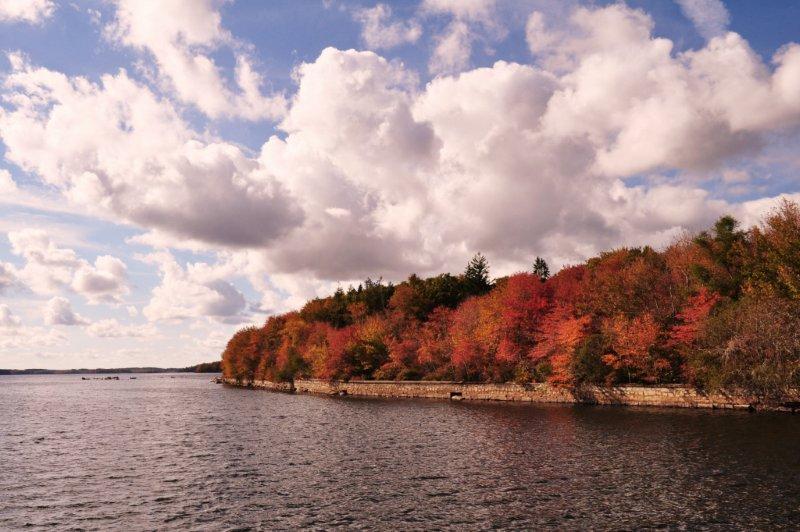
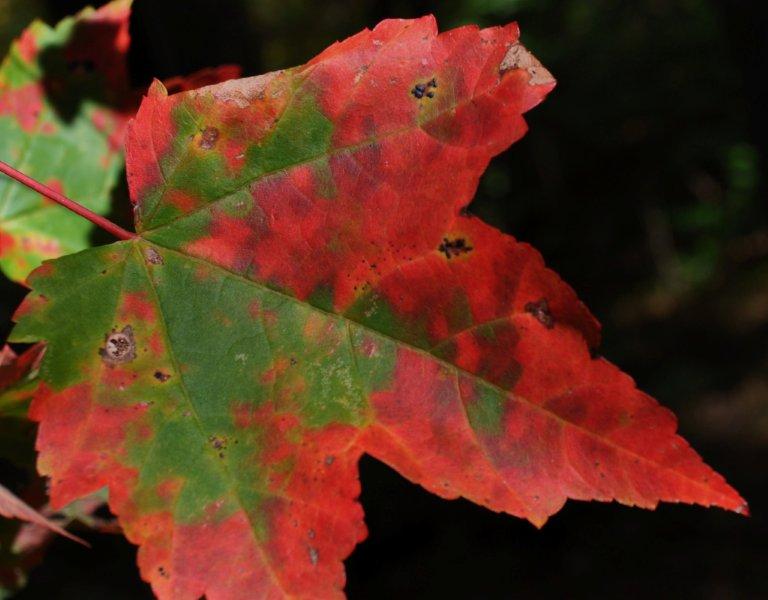
November brings the first frosty nights, but often followed by bright “Indian summer” days. Get outdoors and enjoy.
Here are a few recent Bioreserve photos and one photo of things to come.
.jpg)
<Back
Social