Newsletters
October 2011 - Peace Haven, Bioreserve, Snake, Am. Chestnut
WELCOME TO GREEN FUTURES!
OCTOBER, 2011
“We shall require a substantially new way of thinking if mankind is to survive.”
-Albert Einstein
“Dirty deeds done dirt cheap.”
-AC/DC (Angus Young, Malcolm Young, Bon Scott)
PEACE HAVEN – False information taken as fact!
Dirty deeds by over-the-top Meditech promoters and their apologists have been reported as “truth” for way too long by local news media. Thankfully the Boston Globe gave the fairest and most balanced reporting of the Meditech/Pappalardo vs. Secretary Galvin/MHC controversy, so far, in an article in Wednesday’s (October 26) issue. We would post a link to the article, but it is a paid subscriber site.
Why local development boosters have to lie, bluff, bluster and yell is something we’ll never understand. Don’t make things up … It only makes you look stupid.
The Massachusetts Historical Commission said, “The MHC does not agree with Meditech’s proposal to allow workmen to find artifacts during construction. First, any artifacts found during construction will be out of context and will not be able to provide any accurate information about Native Americans’ use of the site. Second, it is unlikely that any artifacts would be discernable during earthmoving by large construction equipment.”
MHC required that Meditech’s archeological consultants spend, “two weeks doing supplemental locational test excavations and that the archaeological data recovery excavations will require only ten weeks, followed by a technical summary memorandum to be submitted to the MHC two weeks following the completion of the fieldwork.”
Had Meditech complied, they would be erecting their building right now.
-----
Trash we’ve read in the papers or heard on the radio. True or False?
1 -MHC demanded Meditech strip-mine the land.
2 -MHC demanded Meditech strip 21 acres of land.
3 -MHC demanded Meditech to strip 21 acres of land to a depth of 2 feet and have the dirt, “sieved and inspected by archaeologists.”
4 -Peace Haven is a fictitious location. I never saw mention of Peace Haven in the local news before Meditech wanted to build there.
5 -There once was an Algonquin Company gas facility constructed on the site where Meditech wants to build.
6 -Meditech will provide 2,000 jobs.
7 -Secretary of State Galvin wants to screw Fall River because he wants Meditech to build their new facility in Boston.
8 -The Massachusetts Historical Commission hates Fall River.
9 -Arrowheads are stopping this project.
10 -An archaeological inquiry wasn’t required before new Interchange 8B, off Route 24, was built.
11 -How come an archaeological survey wasn’t required for the new Southcoast Biopark?
12 -Stop and Shop built their warehouse on an adjacent site just like where Meditech wants to build.
13 -The Massachusetts Historical Society is the Massachusetts Historical Commission.
14 -Secretary of State William Galvin is, “one low-level constitutional officer.”
15 -Meditech is Fall River’s greatest opportunity since the 1950s.
16 -MHC has had, “a chilling impact on development throughout the state.”
Yep, you guessed it. All the above are FALSE! …except, perhaps, for #8 …and after this debacle, could you blame them?
So far, and this isn’t over yet, winning our “Sounding the Alarm” Award for the most gonzo bombastic hyperbolic rant …drum roll please! …seems to be
http://stationcaster.com/player_skinned.php?s=64&c=466&f=232501
WILDLIFE CORRIDOR – Some good news !
The wildlife corridor we advocated for from the Southeastern Massachusetts Bioreserve (SMB) to the land west of Route 24 is now in place.
Although there are wildlife underpasses north of us, most notably on Route 495, this is the first in our area.
Delayed for almost two years we, and perhaps the relatives of some of the critters that have gotten squished on that road, are happy to see it in place.
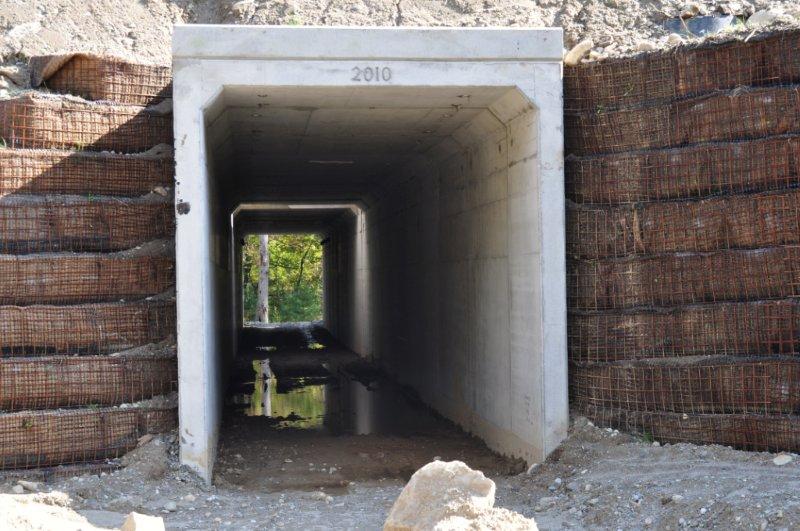
West entrance to wildlife underpass.
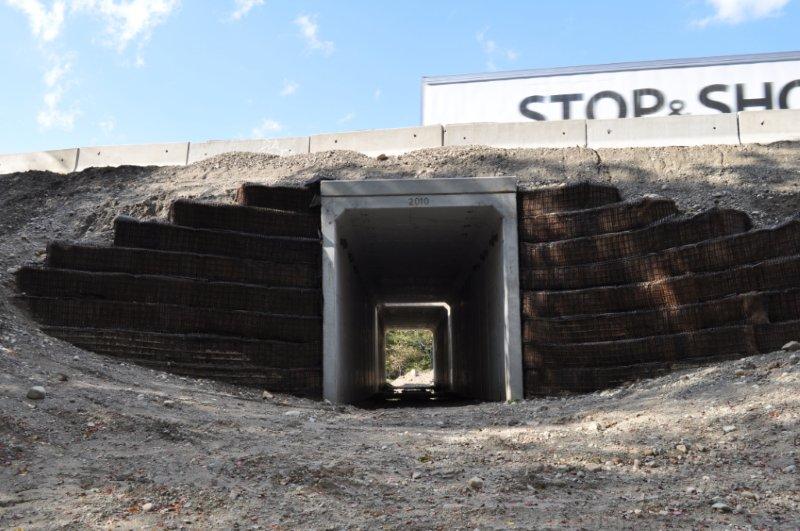
East entrance to wildlife underpass.
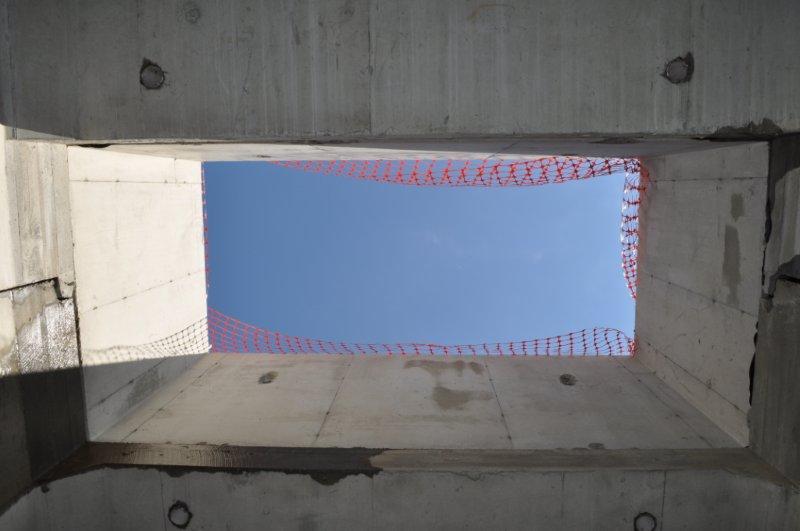
Skylight in the Route 24 median strip. When complete, it will have a chain-link around it.
BIORESERVE FAUNA OF THE MONTH - Black Racer (Coluber constrictor)
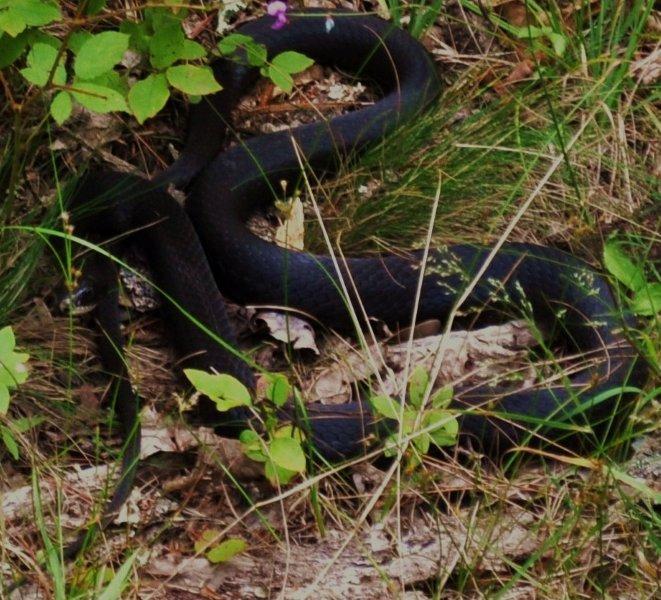
Black racer sunning on Bioreserve trail.
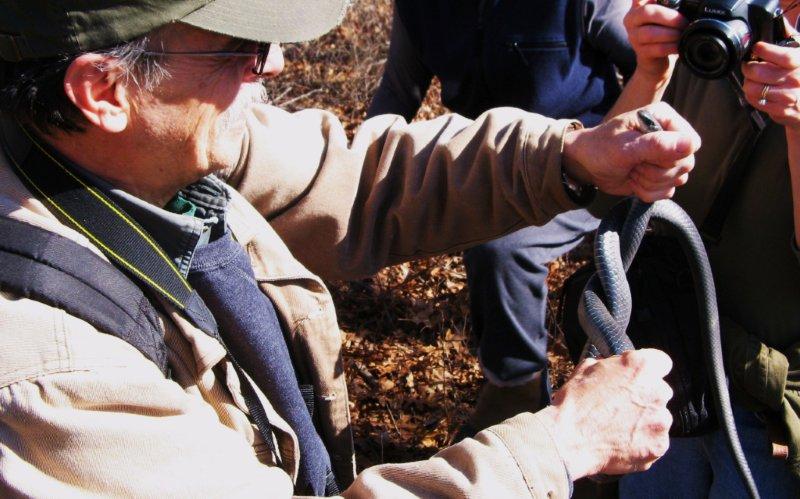
Close-up look at black racer - a Rebecca Cusick photo
The black racer is the largest snake found in southeastern Massachusetts. When fully mature they often measure six feet in length. As their name implies, they move fast.
Black racers are found throughout the United States east of the Rocky Mountains.
Their prey is primarily mice, rats, chipmunks, birds and their eggs and nestlings, frogs, salamanders and other species of snakes. A racer subdues its prey by pressing it to the ground with a few coils of its body. Once struggling ceases the snake positions the food item head first and swallows. Yum!
Mating takes place in late April and May. In late June or July female racers seek out sunny moist areas laying their eggs in decaying wood piles or old rotting stumps and hollow logs. As few as five to as many as twenty-five cylindrical eggs are deposited at one time.
The eggs hatch in six to eight weeks and the hatchlings are on their own. The newly hatched racers are mottled grey, brown and black. It takes three years for the young racer to become completely shiny black, except for a small white patch on its chin.
Especially in the spring, the black racer spends a lot of time sunning itself draped across the branches of small trees or shrubs, usually at the edge of a meadow or forest clearing. When quietly sunning they stay alert, ready to drop to the ground and “race” away at the slightest hint of danger.
When escape is not possible and the snake is cornered, by man or beast, the racer is quick to raise the forward third of its body and strike repeatedly at its antagonist. If the snake makes contact with exposed flesh, it will draw blood. The teeth are so small the bite of a racer usually amounts to little more than a few pin pricks. They will also “rattle” their tails among dry leaves, but unlike rattlesnakes they do not have a rattle and are not venomous. Rattlesnakes have been long extirpated from southeastern Massachusetts.
Worse than the black racer’s bite is the foul-smelling musk it emits from anal glands when attacked or highly agitated.
Compared to regions south of us, we here in cold and cloudy New England have very few reptile species. The intelligent, alert and fast black racer is a wonderful member of our local fauna.
BIORESERVE FLORA OF THE MONTH - American Chestnut (Castanea dentata)
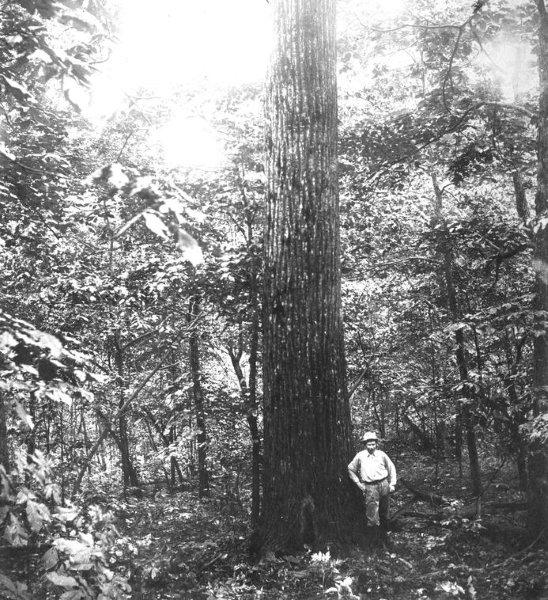
American Chestnut - Photo AEP-TNP27 The University of Chicago Library
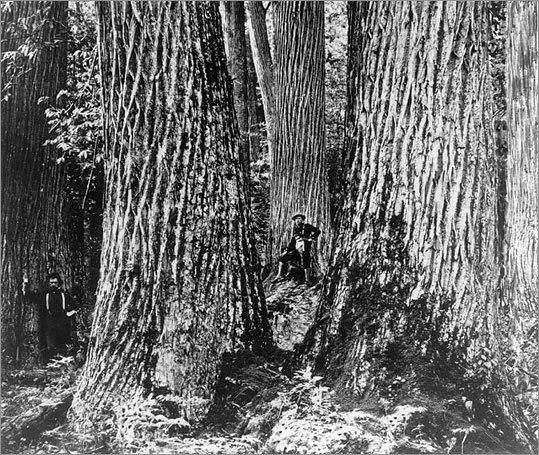
Photo American Chestnut Foundation
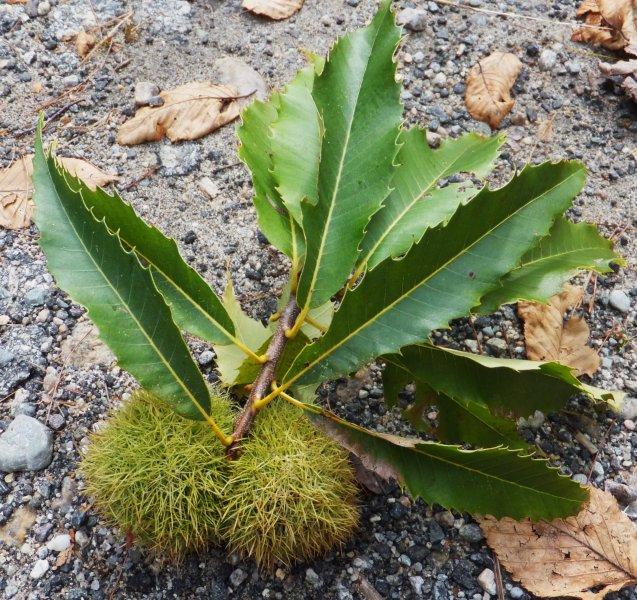
American chestnut leaves and burrs in the Southeastern Massachusetts Bioreserve. When fully ripe there are usually 3 chestnuts in each spiny burr. - a Liz Garant photo
The American chestnut once reigned as the king of deciduous hardwood trees in our native forest. Our local chestnuts often reached a height of 100 to 150 feet with a diameter of 10 to 12 feet.
The chestnut is in the oak family. Unlike the oaks, which normally bear acorns abundantly every other year, chestnuts reliably produce an annual bounty of nuts. American Indians depended on this fall/winter staple as did many native wildlife species.
American chestnuts were once an important forest crop. Early Appalachian homesteaders fattened their hogs on this free natural resource. In the 1800s rural folks gathered tons of chestnuts from the forest floor every autumn and shipped them to the burgeoning cities of the east coast. Every winter, while Jack Frost was nipping at their noses, thousands of city dwellers purchased “chestnuts roasting on an open fire” from street-corner chestnut roasters.
The American chestnut tree ranges down the length of the Appalachian Mountains from New England to northern Georgia, Alabama and Mississippi and from the Atlantic coast over to eastern Ohio, Kentucky and Tennessee.
The nuts of the American chestnut are enclosed in a spiny green burr. Each burr usually contains three nuts. In late September the burrs open and the nuts drop to the ground.
Chestnut lumber contains tannins which make the wood rot resistant. The wood is straight-grained making it easy to work and split. Colonial era split-rail fences were made from chestnut as were the shingles that protected early houses and barns. Chestnut tannins were also used in the tanning of leather.
This most important hardwood tree can still be found in area forests, but it is now only a shadow of its former self.
In the late 1800s someone imported Japanese chestnut trees into New York that carried the spores of an Asian chestnut blight fungus (Cryphonectria parasitica).
Japanese and Chinese chestnuts evolved with the blight and over the millennia immunity developed in those chestnut species. Our American chestnut had no such immunity and millions of chestnut trees withered away and not one giant American chestnut tree exists today.
Fortunately for the chestnut and us the blight does not kill the chestnut tree roots and new shoots continually sprout from old roots. Unfortunately as soon as these shoots become small chestnut trees, at ten to thirty feet in height and just as they begin to bear nuts, the blight fungous attacks and kills them.
The American Chestnut Foundation (ACF), www.acf.org, is an organization dedicated to restoring the American chestnut to our forests. Through selective breeding and genetic research they are attempting to develop a blight proof American chestnut.
Our Southeastern Massachusetts Bioreserve (SMB) is one site where an experimental ACF American chestnut nursery will be planted. Hopefully, future generations of SMB hikers will someday walk among giant American chestnuts like our ancestors once did.
OCTOBER’S EXPLORING THE BIORESERVE WALK -
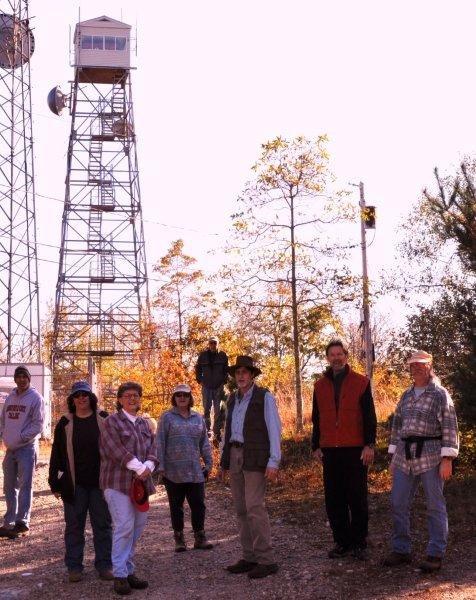
October’s Exploring the Bioreserve Walk was held on October 22. Walkers met at the intersection of Tower Road and Yellow Hill Road.
On our flat coastal plain Copicut Hill is the closest thing we have to a mountain. It is the second highest natural geographic feature, at 358’ above sea level, in Bristol County.
Those interested in getting a broader view of their environment climbed the Copicut Hill Fire Tower. It was a clear, brisk morning and Boston’s Great Blue Hill was visible to the north and the city of Providence, Rhode Island, to the west. To the east Buzzard’s Bay sparkled in the sun.
Our next Exploring the Bioreserve Walk will be in early December. It will be a nighttime walk along some of the broader Bioreserve trails. If it is a clear night we can search for Orion. Perhaps an owl will make an appearance.
When we have a date and meeting location we will send that out via an “Action Alert.”
AUTUMN IS WANING -
Tropical storm Irene took its toll on the trees in southern New England. Most of the fall leaves were rather drab this year. Many trees had their leaves burned by the ocean salt spray blown in by the storm.
Despite those minor problems, which we hope to see rectified next year, even a dull fall has some clear, sunny and cool days. A great time of the year to explore a forest, park, woodland, nature reserve, etc. near you.
Click on our Calendar for late fall things to do.
<Back
Social