Newsletters
August 2011 - Bioreserve, Hummingbirds, Sweet Pepperbush
WELCOME TO GREEN FUTURES!
AUGUST, 2011
"Anyone who believes exponential growth can go on forever in a finite world is either a madman or an economist."
— Kenneth Boulding
"Why should I care about future generations? What have they ever done for me?"
— Groucho Marx
OUR MONTHLY EXPLORING THE BIORESERVE WALKS –
On this month’s walk we learned the fascinating history of Fighting Rock …and where the rock is now.
We also followed the old Indian trail known as Mowry Path, walking in the footsteps of Weetamoe and King Philip.
From Mowry Path we walked to Hogs Rock, around Dr. Durfee’s Mill Pond, along the Esker Path, across East Line Trail and then back to Blossom Road via Woodchuck Trail.
September’s walk will be announced in a couple of weeks in an “Activity Alert.” Watch for it.
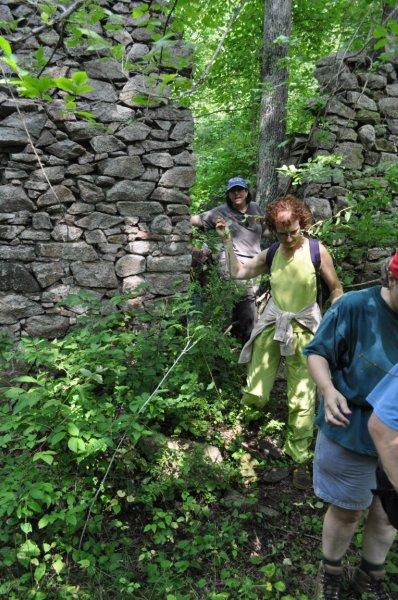
WALKING BY THE RUINS OF DR. DURFEE’S EIGHTEENTH CENTURY MILL
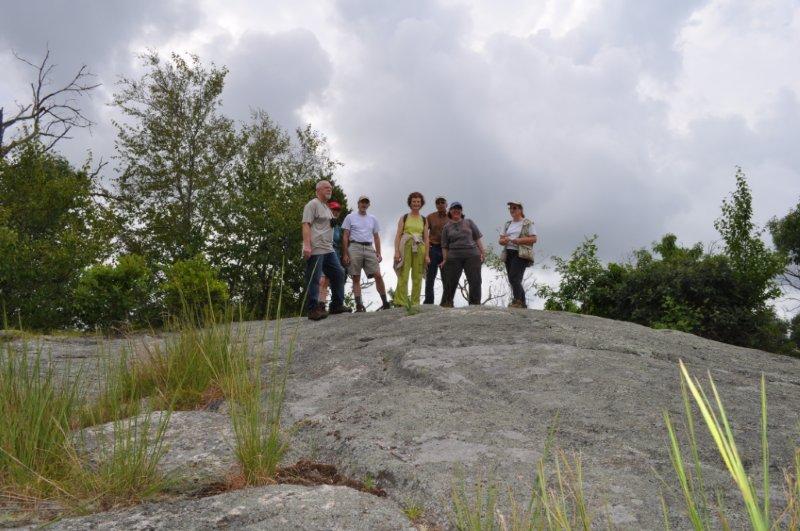
ON TOP OF HOG ROCK
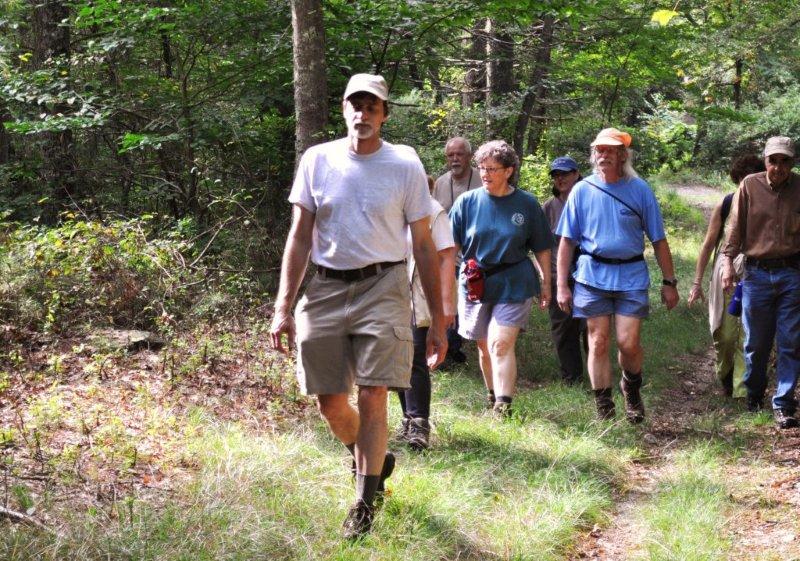
WALKING ALONG THE OLD TRAIL KNOWN AS MOWRY PATH
BIORESERVE FAUNA OF THE MONTH – Ruby-throated Hummingbird (Archilochus colubris)
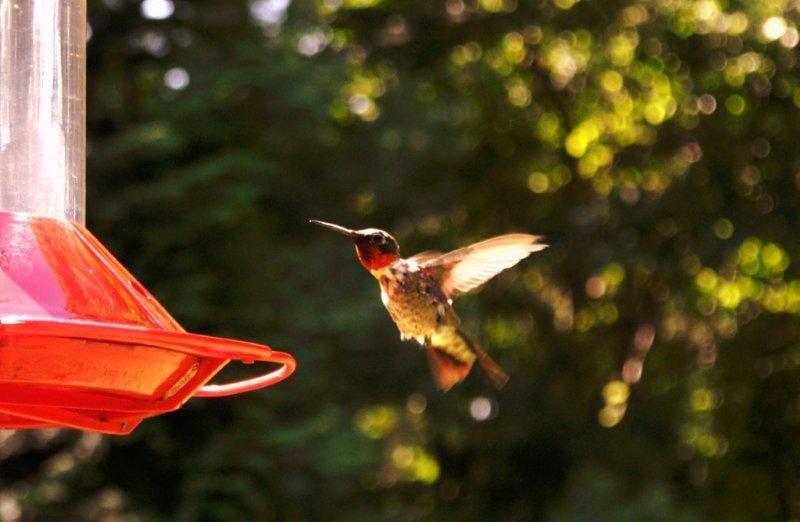
Hummingbirds are everywhere! From deep, dark forests to sunny urban gardens our little ruby-throated hummingbirds are thriving.
The popularity of sugar-water hummingbird feeders helped make the native ruby-throat one of the commonest New England summertime birds.
There are three hundred and twenty-eight hummingbird species. Twenty-eight of these are threatened with extinction. Hummingbirds are found only in the Western Hemisphere from northern Alaska south to Argentina and Chile. The smallest bird in the world is the bee hummingbird (Mellisuga helenae) of Cuba. It is only one and a half to two inches long.
Our ruby-throated hummingbird, three to three and a half inches in length, is the only hummingbird species in New England. Ruby-throated Hummingbirds are bright emerald or golden-green on the back and crown, with gray-white underparts. Males have a brilliant iridescent ruby-red gorget (throat) that looks black when not reflecting sunlight.
Ruby-throats are superb flyers with the ability to fly full-out and stop in an instant, hover in midair, and rapidly accelerate up, down, sideways, and backwards. Although masters of flight they cannot walk, but do perch.
Ruby-throats return from their wintering grounds in South and Central America in late April. They leave our area in September with stragglers departing for warmer climes as late as October. They fly across the Gulf of Mexico …nonstop!
Hummingbirds primarily eat flower nectar, tree sap, insects and pollen.
The ruby-throated hummingbird’s rapid metabolism, fast heartbeat and high body temperature require they eat often. During daylight hours they feed every fifteen to twenty minutes. To make it through the night, their heartbeat drops by two-thirds and their metabolism slows.
Male ruby-throats are the first to arrive in spring, returning to the general area of their birth. Often this is before the first spring wildflowers are blooming and the ruby-throats are dependent on tree sap, following sapsuckers and other woodpeckers, for sustenance. Both sexes are very territorial and can be observed chasing each other and even larger birds, such as hawks, away from their territories. They communicate via visual and auditory displays.
The male bird’s courtship display is quite spectacular. When a female enters the male’s territory he makes a looping, u-shaped dive starting from as high as 50 feet above the female. If the female shows interest the male shifts to making fast side-to-side flights while facing her. If accepted by the female, mating soon follows.
The ruby-throated hummingbird’s nest is a little larger than half a walnut shell. It is usually constructed toward the end of a thin tree branch. Nests are usually eight to forty feet above the ground. It’s made of thistle or other fine plant material “stitched” together with spider web silk. The female shapes the nest by pressing with her body. The outer surface of the nest is “shingled” with bits of lichen.
The female lays from one to three eggs, usually two. They are white in color and the size of small beans. The average incubation period is fifteen days.
Newly hatched hummingbird chicks are naked and look more like insect larvae than baby birds. Within a few days their eyes have opened and feathers have emerged. They fledge in three to four weeks.
Ruby-throated Hummingbirds can be attracted by setting out hummingbird feeders or by planting tubular flowers, such as …lobelias, trumpet vine, columbines, jewel weed (touch-me-not), fuchsias, butterfly bush, hollyhocks, petunias, morning glories, honeysuckles, etc.
BIORESERVE FLORA OF THE MONTH – Sweet Pepperbush (Clethra alnifolia)
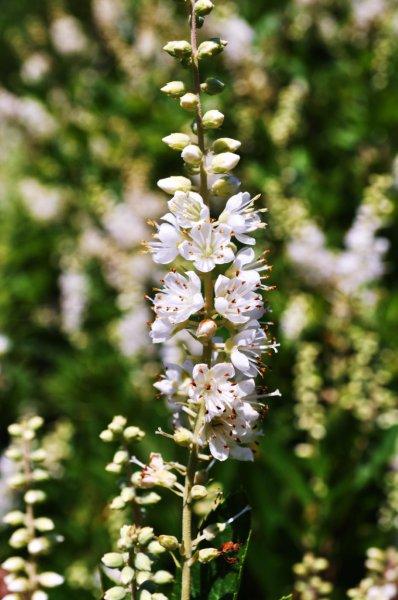
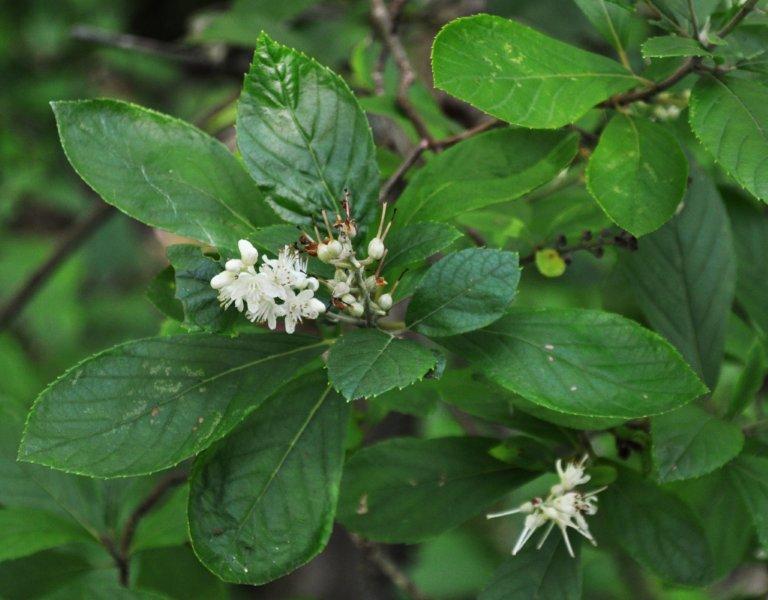
Sweet pepperbush, also known as summersweet, is a flowering shrub native to eastern North America. It is found only within one hundred miles of the coast from southeastern Canada south to Florida and west to Texas.
Clethra is an ideal wetlands indicator species. It does not grow on dry ground, preferring wet, acidic woodlands, stream banks, swamps, bogs and shallow shoreline areas of ponds and lakes.
Sweet pepperbush reaches a height of nine feet. It is deciduous, bearing glossy, dark-green, oval leaves with serrated margins. The flowers are borne in racems that are five to six inches in length. Flowers are white and have a very heavy, sweet fragrance that some find objectionable. When hiking in damp forested areas one often smells the sweet pepperbush before seeing it.
The flowers of sweet pepperbush are heavy nectar producers and very attractive to hummingbirds, bees and other nectar feeding insects. Flowers bloom July through August.
The fruits of the sweet pepperbush are at first green, then turning to brown. The mature fruit bears a resemblance to peppercorns, hence the name of the shrub. The fruits are not edible.
TIRED OF WALKING? DIAL 911? -
“HONK, HONK, HONK!!!”
That noise we’ve recently been hearing is the state police blowing “their own horn.”
Occasionally folks recreating in the Southeastern Massachusetts Bioreserve (SMB) get “turned-around” or hike a little bit more than they should, get tired, hungry, or run out of daylight.
It rarely makes the local news, but the latest such incident …to use the latest overused term …went viral!
A Boston television station even interrupted its normal programming to announcing the “rescue” of an “experienced hiker” from the “dense forest.”
Our local newspaper ran multiple news articles and an editorial on the incident and went all the way to Plymouth to cover the state police “press conference,” complete with photo op of the heroic state police standing in front of the rescue chopper.
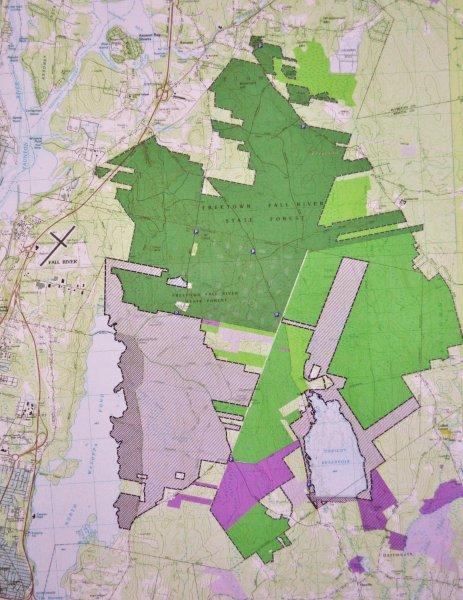
Not sure where you are in our area woods? Most folks discovering that would continue walking until they came to a major road or until they recognized an area they’d previously walked by. Less than an hour’s walk …more likely fifteen to twenty minutes …will put you out on a major SMB road.
Maybe you’re now far from your car? Then walk the road back or use your cell phone to call a relative or friend to come pick you up and drive you around until you find your vehicle.
Tired from walking? Stop and rest. Take a nap. There aren’t any lions or tiger or bears in the SMB.
Running out of daylight? Keep walking and you’ll be out on a road within the hour. No night monsters, sasquatches or evil trolls in the SMB.
We’ve been there …we’ve done all that.
Now, having said the above, if you’re hiking and break your leg or another appendage, have an unexpected health problem, have a tree fall on you, get hit by lightning, become hypothermic after losing your snowshoes in a December blizzard …or in any other real emergency …call 911.
Sorry, state police, but we don’t see the need for a rescue …and the incredible cost in manpower, equipment and vehicles …of a healthy, young person hiking a “wooded trail” on a warm and dry summer night in August. Come again? Rescued from what?
Tired, bored, sleepy, hungry, lonely, need some attention? Take a walk in the woods and then call 911 for “rescue.” Isn’t that the message the state police are sending?
We here at Green Futures spend a lot of time and effort advocating for and familiarizing folks with SMB’s natural and historical wonders. “Scare stories” negatively impact building SMB friends and advocates.
We don’t need folks afraid to walk and recreate in the “dense forest” and “unfamiliar woods.”
MORE HUMMINGBIRDS IN THIS E-NEWSLETTER -
Green Futures’ members recently gathered for a summer potluck picnic and hummingbird gala.
Below are a few photos. Thanks to Roger and Liz for once again hosting the event.
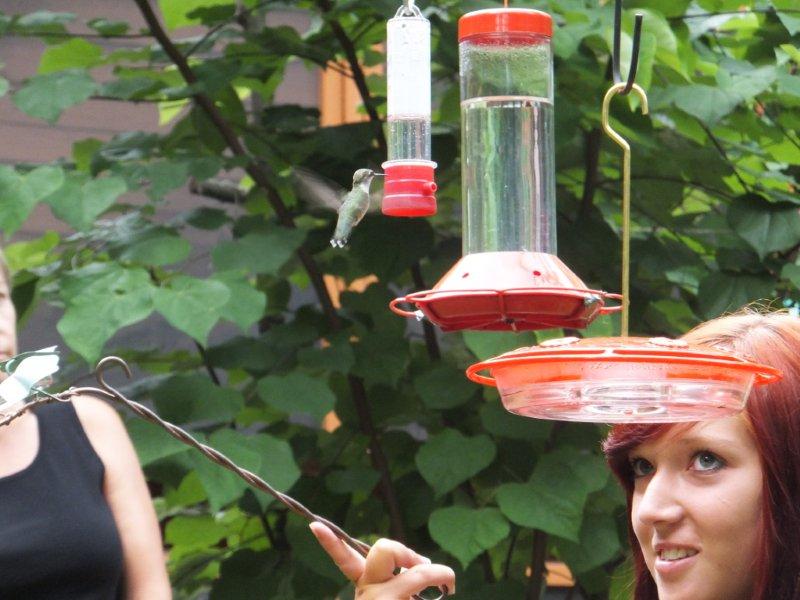
Attempting to hand-feed hummingbird
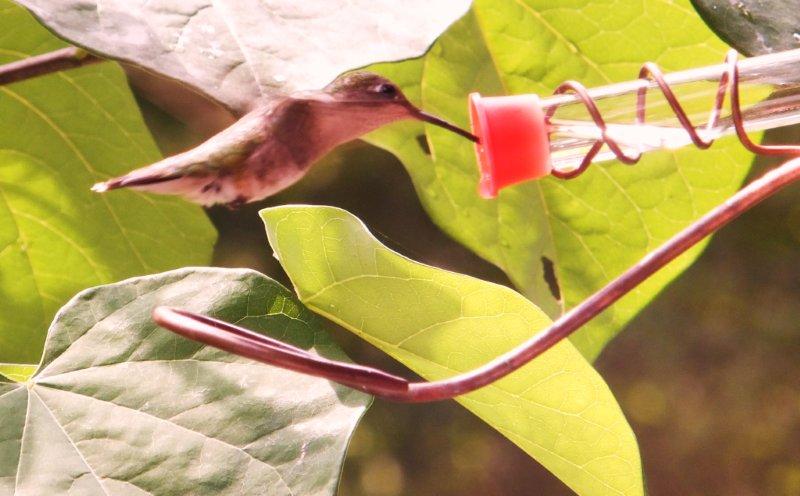
Hummingbird feeding from hand-held feeding wand

Roland doing his famous “Fall River hummingbird” impression

An ancient sage regaling the assembled with tales from his distant past
-------------------------
Fall is just around the corner. Click on our Calendar for Autumn activities and events.
<Back
Social