Newsletters
August 2010 - Somerset NRG, Casinos, Solid Waste
WELCOME TO GREEN FUTURES !
AUGUST, 2010
"Nuclear waste is a heavy burden to lay on our children and
their children and their children's children and their
children's children's children and their
children's children's children's children.........................................."
-Rufina M. Laws
CITY OF FOOLS –
You can’t make this stuff up. Within the past few weeks the local newspaper has been chock-full of articles about continuing attempts by area politicians, unscrupulous developers, and big-buck investors …all intent on making sure Greater Fall River remains Massachusetts’ premier environmental basket case.
Here are three recent excellent articles from The Herald News. What do you think?
We’ll start with an article updating NRG’s so-far-stymied plan to incinerate waste, help accelerate climate change, and increase air pollution.
“Plasma gasification” is a NRG euphemism for incineration.
By Grant Welker
Herald News Staff Reporter
Posted Aug 21, 2010 @ 04:52 PM
Last update Aug 22, 2010 @ 12:25 AM
SOMERSET —
Almost eight months after the Somerset Station power plant was shut down, there is still no timetable for when the plant will begin creating power again, as a proposal for a new energy-production process is stuck in limbo.
The coal-powered facility on Riverside Avenue was deactivated in January following a state mandate to either switch to a clean energy production method or stop operations. But with a state policy banning the method of energy production the plant’s owners want to use and with lawsuits from environmentalists, reactivation doesn’t appear imminent.
In the meantime, the plant, still sometimes known as Montaup, hasn’t been able to rehire the 40 workers in laid off when the plant was shut down. And the town has been losing hundreds of thousands of dollars in tax revenue in recent years as the plant cut back on — and ultimately ended — production.
NRG Energy, which runs Somerset Station, received environmental approval in January 2008 to use a mix of 65 percent coal and 35 percent biomass to create energy in a process called plasma gasification. But that plan has been put on hold following appeals from the Conservation Law Foundation and 12 citizens.
Massachusetts officials urged NRG to seek a permit to use only biomass, and not coal, in the plasma gasification process, said spokesman David Gaier. But the state then placed a moratorium on the use of biomass while officials study what policies should be put in place.
Massachusetts also has a moratorium on incineration, which the state Department of Environmental Protection said was put in place primarily due to concerns over mercury emissions. NRG says plasma gasification is far different than incineration because it does not technically burn the material used in the process and does not emit the same harmful chemicals.
Under the latest proposal, the plant would use construction and demolition material and wood if those materials are approved by the DEP. Extreme heat — up to 10,000 degrees — would be used to break the materials down to basic components known as synthetic gas, or syngas. The process is clean and leaves little in terms of waste, and none of the wood would be taken by clear-cutting forests, the company says.
“We remain excited by this technology and, given the opportunity, we think it provides some solutions on the waste side and it’s tied to the creation of electricity,” said John O’Brien, NRG’s senior vice president of government affairs.
The Conservation Law Foundation, which has led opposition to the reactivation of Somerset Station, is satisfied that the plant has stopped operating.
“We’re very pleased that they’re shut down,” said Shanna Cleveland, one of the group’s attorneys. The group also opposes the use of biomass for plasma gasification, saying it would release arsenic and lead into the environment.
A closed plant has immediate benefits to the environment because no coal is being burned, Cleveland said. There are also potential longterm benefits, she said. As the plant remains shut down, the likelihood increases of Somerset Station looking at the best alternative — natural gas.
But NRG is not considering natural gas, O’Brien said. “It really is not (an option) at this time,” he said, because the location and type of site make it unfeasible. There are also no plans to sell the plant, according to a spokesman.
Uncertainty in full supply
It’s unclear how soon anything could be restarted at the plant. Even if plasma gasification were to receive full approval today, the process of switching the plant to the new use would take 18 to 24 months, according to NRG.
In addition, the moratorium on incineration enacted by the state DEP appears likely to be maintained; it is included in the draft of the department’s 2010 Solid Waste Master Plan. Some forms of combustion have been banned since 1990, and more recently the DEP has emphasized its concerns over mercury emissions, which are a byproduct of the incineration process.
A revision of the 2000 master plan four years ago said that mercury emissions across the state from such plants had fallen significantly over a three-year period, and that the DEP “believes that allowing additional municipal waste combustion at this time could jeopardize this progress.”
NRG says its plan for plasma gasification would not produce the same
harmful emissions.
The company has also been active voicing its stance during the public-comment period for the 2010 Solid Waste Master Plan, which ends Sept. 15. “It hampers what we think can be an exciting technology,” O’Brien, the NRG official, said of the moratorium.
A new technique
Plasma gasification is still a relatively new method, and no other NRG plant uses that system, O’Brien said. In Massachusetts, there are seven plants that use what the DEP calls solid waste combustion, including the SEMASS plant in Rochester, which uses municipal waste.
How the environmental impact of incineration compares to the burning of fossil fuels is not easy to measure, according to a report released in June by the Manomet Center for Conservation Sciences in Plymouth.
The 180-page study, funded by the state, said that burning wood for energy creates more greenhouse gases per unit of energy produced, but those emissions are removed from the atmosphere over time as the forests harvested for production regrow. The first period, when wood creates more emissions than fossil fuels, was called the “carbon debt” period, and the latter phase the “carbon dividend.”
“It is not possible to estimate the time it would take to pay off the debt or the magnitude of the carbon dividends” without studying in far greater detail factors like the life cycle of the wood, the type of fossil fuel being replaced and the management of the forest.
Otherwise, the report said, it is “difficult to draw conclusions about (greenhouse gas) implications of using wood.” NRG said that not all findings in the report were applicable to what would be put in place at Somerset Station.
Less emissions, less taxes
While the station’s future remains unclear, the town of Somerset has been losing tax revenue from the plant each year because it has been producing less and less energy. In fiscal 2006, the plant paid the town $526,000 in personal property tax, but that amount has fallen to $167,000 in 2009 and $73,000 in 2010. (The amount paid in real estate tax, which depends on different factors, has remained flat and in fiscal 2010 was about $650,000.)
Over that time, the value of the plant has dropped from more than $22 million to $2.8 million.
Brayton Point station, by comparison, was most recently valued at $370 million and in fiscal 2010 paid the town $9.6 million in personal property tax.
“We’re kind of caught in the middle here,” Selectmen Chairman William Meehan said. The tax revenue has gone away, but so have the emissions that come from the goal burning process.
“How much is health worth?” Meehan said. “Health is the No. 1 priority. We’re not going to OK anything that would put the people of Somerset in jeopardy.”
A three-year tax agreement between the plant and the town has run out, and the two sides haven’t negotiated on a new pact, Town Administrator Dennis Luttrell said. It also isn’t clear how tax income brought in by the town could change in the future. A further drop in tax revenue would be “problematic,” he said.
INDIANS GET REVENGE FOR SALE OF MANHATTAN-
MAYOR SELLS LAND TO SOVERIGN NATION –
The last parcel of commercial/industrial land in Fall River to be squandered.
By Michael Holtzman
Herald News Staff Reporter
Posted Aug 29, 2010 @ 09:40 PM
Last update Aug 30, 2010 @ 12:24 AM
FALL RIVER —
Mayor Will Flanagan is stepping up efforts to support the Mashpee Wampanoag tribe’s application for federal land sovereignty for the 300-acre tract the city agreed to sell the tribe if the state legalized gambling this year.
He’s calling the Mashpee’s proposed destination casino the city’s “No. 1 development priority” and one that warrants taking bold steps.
“This is not a bridge to nowhere or a folly. This is a $500 million project,” Flanagan said.
Flanagan is taking this tact while the City Council has called for reviewing the use of the undeveloped 300 acres in the northern sector off a new Route 24 interchange after the Legislature and Gov. Deval Patrick failed to agree upon legalized gambling during its 2010 session that ended a month ago.
With legalization not appearing imminent, Flanagan formalized the alternative route he’s backing for what he says is the best chance to add thousands of jobs and boost the local economy.
“I ask that you expeditiously and favorably review the tribe’s land in trust application,” Flanagan wrote U.S. Secretary of the Interior Ken Salazar.
He noted the Mashpee tribe amended its 2007 land trust application to include Fall River. The tribe did that in mid-July.
“Development of that land that the tribe is seeking to have placed in trust will provide the good jobs that are so desperately needed in this area. In addition, revenue that will be provided to the city through an intergovernmental agreement will allow us to fund the public safety, education and infrastructure projects that are so important to the health of this city and the surrounding region,” reads the letter Flanagan wrote Aug. 17 and shared last week.
The issue eliciting the most questioning has been Flanagan’s continued prioritization of the 300-acre site for gambling instead of as a biotechnology and life sciences park with the University of Massachusetts Dartmouth building an anchor test facility with state-approved funding.
Instead of using that state forest land sold to the RDA for industry — after compromises with environmental groups — the administration has negotiated with the university for an alternative bio-park site.
UMass officials said they plan in early September to decide on a location between the Flanagan administration’s alternative Riverfront Business Park in Freetown and a second SouthCoast proposal at the New Bedford Business Park in that city.
Each plan provides 4 acres and a $3 million loan for the anchor facility, with another 50 acres for biomanufacturing expansion.
FROED would purchase and take title to the nearby Freetown acreage, Flanagan said.
According to RDA Chairman William Kenney, his authority received a legal recommendation that it cannot buy land outside the city, such as the adjacent Freetown acreage.
“Once UMass makes their announcement to locate in Greater Fall River,” Flanagan said, “it may prompt the RDA to amend their vote, which would allow for the infusion of $6 million to purchase the land in Freetown.”
That 325-acre undeveloped property is owned by controversial Rhode Island land developer Churchill & Banks, headed by Richard Baccari.
The RDA voted 3-2 on July 22 to sell the 300 acres of the former biopark to the Mashpees for $21 million pending legalization of gambling in Massachusetts this year and other conditions.
In order for FROED to purchase the acreage in the Freetown park, Flanagan said, “We would seek $6 million from a separate entity, more than likely the Mashpee Wampanoags. The $6 million is very critical to complete this transaction,” he said.
“Lurking in the background is what’s UMass going to do?” said Kenney, who has been contacted by concerned city councilors after voting against the RDA sale in July.
“If they say, ‘We’d like to go to New Bedford,’ what does the mayor do then?
He says they’re both going to happen,” Kenney said of Flanagan’s continued pronouncement the Mashpees will build a casino in Fall River and the university will build in Freetown through a multiparty transaction.
Flanagan and FROED’s director, Kenneth Fiola Jr., said the city would not lose significant tax revenue by shifting the biopark to Freetown because the university does not pay taxes and the level of companies agreeing to locate to such a park would require longterm tax breaks.
Also, Fall River would supply the water and sewer to the riverfront park, they said.
While the City Council has requested that Kenney, Fiola and the Flanagan administration update the status of the casino and land sale to the tribe at its next meeting Sept. 14, councilors recently considered issuing a resolution to change courses.
“It may be time to reshuffle again,” said council Vice President Linda Pereira. She called on Flanagan, whom she’s often at odds with, “to put all the cards on the table.”
The resolution proposed by Councilor Eric Poulin was signed onto by four councilors but never filed. It “encouraged the Fall River Redevelopment
Authority to convene a meeting as soon as possible and that they consider voting to offer the 300 acres (off Route 24) back to UMass before the university reaches its final decision.”
“My fear is to lose both,” Poulin said. Councilors Brad Kilby, Leo Pelletier and Pereira agreed, but Poulin fell short obtaining the unanimous council support he sought.
Poulin said when Flanagan in May announced the tentative casino agreement with the tribe, it was with the prospect the state would legalize gambling by the end of July.
That put the prior plan of developing a prestigious and state-backed biopark on the back burner.
The objective, Poulin said, was to find needed short-term casino jobs with city unemployment in the mid-teens, and the longer-term jobs coming from biotechnology. “Now we could be chasing after a casino for three years or more,” Poulin said.
He said Flanagan has not identified how casino construction could start quickly. “I have some questions and concerns about developing the site with sovereign nation status.”
That’s what prompted Kenney to vote against the RDA sale. It’s yet to be signed because the state has not legalized casino gaming.
Flanagan, through talks with tribal leaders and the Department of Interior, said final documents to designate the RDA-owned park as sovereign land could take “a few months.”
But according to the Bureau of Indian Affairs web site, there are more than 1,900 land trust applications, of which “over 95 percent are for non-gaming purposes.”
Salazar said this summer he’s prioritized restoring tribal lands for non-gaming applications, such as to provide housing, health care and education to improve tribal members’ self-sufficiency.
“He’s put a lot of eggs into this basket,” Poulin said of Flanagan’s secondary option for the tribe to build a casino.
“That’s a heck of risk the mayor took,” Pereira said. “I don’t buy that the pay-off is what he says it’s going to be.”
From materials Flanagan circulates from the Mashpees, he estimates the phased project would include: 1,000 to 1,200 construction jobs building the casino and first hotel and 3,500 to 5,000 permanent jobs; they’d pay $30,000 to $45,000 with tips; and would spur 5,000 to 6,000 “indirect jobs,” he said.
With funding by the Malaysian group that financed Foxwoods, the project would include two more hotels, a golf course, spa and retail/entertainment complex, the tribe stated.
Poulin said timing was a prime reason he did not file the council resolution. He said he tried unsuccessfully to have a special meeting before their regular session on Sept. 14. “At that point UMass would probably have made a decision,” he said.
Councilor Michael Lund, however, is among council members that believe the Flanagan administration should be given more time to bring a casino.
“I think Flanagan is looking at the casino as a way to bridge the gap for jobs for people in the 30-50-year-old age group who could be retrained. And I think there’s merit to that,” Lund said.
He said by the Legislature apparently not passing gaming this year, “We’re not under the gun. Let’s take our time and get this right … I think Flanagan is trying to do the right thing, and I think we have a unique opportunity.”
Lund said he also believes the city needs to be careful if the RDA property goes into sovereign land trust with the tribe. “What happens if the casino doesn’t come and the Indians own it and there’s no reverter clause (back to city ownership)?” he asked.
Flanagan said the tribe’s financial backers would invest to build a casino. Also, having the park in land trust would not lift the prohibition against using it for a landfill, Flanagan said. “It would never happen,” he said, stating the city and state would sue the tribe for such a use that would be tied up for years.
“If I believed this project had no life in it, I would never pursue it,” Flanagan said. He’s convinced Massachusetts soon will legalize gambling. “There’s been too much of an investment for this not to occur.
HEY, WHAT ABOUT NRG? INVITE THEM TOO! –
Incinerators and casinos! Sound like a winning combination to you?
By Charles Winokoor
GateHouse News Service
Posted Aug 30, 2010 @ 11:48 PM
TAUNTON —
Mayor Will Flanagan, formerly Taunton’s assistant city solicitor, and Corporation Counsel Steven Torres, former Taunton solicitor, are expected to return to Taunton to attend tonight’s City Council Committee on Solid Waste meeting.
Discussion will focus on Taunton’s attempt to establish a trash-to-energy facility to replace its municipal landfill on East Britannia Street, which is slated to close no later than March 2015 and possibly as early as late 2013.
Taunton finds itself in a precarious position. Gov. Deval Patrick and state officials with the Executive Office of Environmental Affairs and Department of Environmental Protection have firmly rejected the city’s bid to build a waste plant capable of producing electricity as a profitable byproduct.
Taunton Mayor Charles Crowley previously has stated that EOEA officials consider the process by which such a facility operates to violate the DEP’s 20-year-old moratorium on new facilities that incorporate incineration of solid waste.
Officials have also, to date, denied the city the opportunity to pursue permits to develop an ethanol-producing facility — which Crowley said would be less profitable, but would be acceptable to the state because of a gasification process that avoids any combustion whatsoever.
Crowley has touted that approach as a viable option to electricity, and the City Council in March voted to enter into negotiations with Pennsylvania-based Interstate Waste Technologies to eventually arrange financing for the $600 million project.
Although the technology passes muster, Crowley said the state has withheld approval because of unfavorable market conditions in the biofuel industry, which in turn makes long-term financing prohibitive.
With either scenario — be it electricity or ethanol — the city, he said, would collect millions of dollars in “tipping,” or royalty, fees paid by other towns and cities eager to dispose of their trash in the Silver City.
The mayor also has said that if the city isn’t able to open a waste facility by the time the landfill closes, its annual outlay for its trash to be hauled out of the city would be at least $3.5 million.
The city currently spends $1.5 million a year for solid-waste disposal, notwithstanding revenue fees from other communities and $900,000 from the sale of one-dollar, municipal garbage bags to residents, he said.
Torres formerly played an integral part in developing the city’s strategy to build a waste-to-energy facility. He took two tours to Japan to get an up-close view of a functioning gasification-based trash plant.
He said the state is missing the boat by denying Taunton the chance to build either an environmentally friendly electric-based plant or one that produces ethanol.
“This is environmentally the best solution,” Torres said. “And it’s not just a Taunton issue, it would be a regional solution.”
Torres said that Fall River’s landfill, which has earned the moniker Mount Trashmore, will be forced to close “in a couple years.”
“This is an obvious solution for us (Fall River) to save millions of dollars in the long run,” he said.
Installing a cutting-edge waste facility in Taunton, he contends, has the potential to save taxpayers in the commonwealth “hundreds of millions of dollars over the next 20 years,” all the while avoiding out-of-state hauling to landfills that continue to produce greenhouse gases.
“It’s time for state officials to realize this ... and time for the nonsense to stop,” Torres said, adding that, “We’ll be there to lend our support for the city of Taunton to get the permits they’re entitled to.”
Flanagan said Fall River “looks forward to partnering with Taunton” in order to establish a modern, solid waste facility that will benefit the residents of both cities.
“We hope to work jointly to help Taunton secure the permitting it needs,” Flanagan said.
The council has also invited James Binder, of Alternative Resources Inc., Taunton’s engineering consultant, attorney Tino West, members of the city’s Board of Health and representatives of IWT and the Taunton Municipal Lighting Plant.
The landfill’s expiration date could be extended from 2013 to 2015, if the health board’s three directors eventually vote in favor of allowing for another 20-feet of usable height.
Gerald Croteau, the councilor responsible for the motion to invite Flanagan and Torres, said he “looks forward to a constructive meeting.”
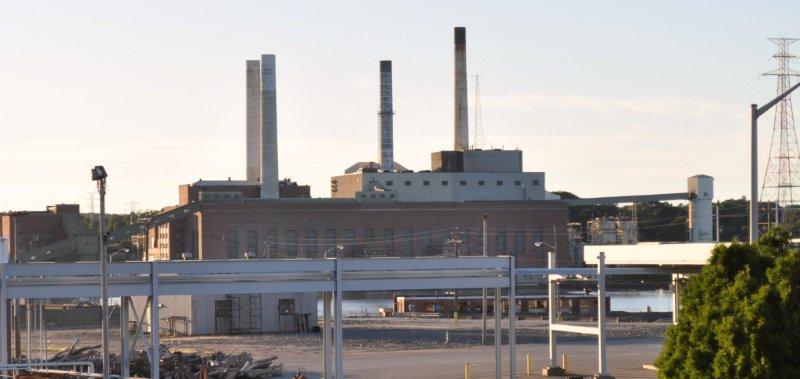
NRG (Montaup) waiting to burn trash.
---------------------------------
Don't forget to visit our calendar for meetings and outdoor activities.
<Back
Social