Newsletters
June 2014 - The Bioreserve, Red Squirrel, Blue-Green Elfcup
WELCOME TO GREEN FUTURES !
JUNE, 2014
“The creation of a thousand forests is in one acorn.”
- Ralph Waldo Emerson
“The truth is incontrovertible, malice may attack it, ignorance may deride it, but in the end; there it is.”
- Winston Churchill
***THE ALL BIORESERVE JUNE EDITION***
THE WAY MOTHER NATURE WANTS IT – Taking back the forest
If you’ve read our e-newsletters over the past year you know we’ve been trying to get the Massachusetts Department of Conservation and Recreation (DCR) to follow their mission statement and repair what was once a beautiful wooded hillside and restore a small section of Rattlesnake Brook immediately below. If you are one that sent in comments and/or letters of support, we thank you. Although we are still waiting for repairs and restoration, DCR has become more involved and recently been very active in quickly cleaning up illegal dumping in the forest and tightening security against illegal access and improper use of this public open space land that they manage.
This past year we have shown, in our monthly e-newsletters, many photos of trash and illegal motorized use …and the horrendous damage to the land caused by this activity …out in the Southeastern Massachusetts Bioreserve (SMB). DCR has finally stepped-up and has been doing such a good job that we don’t have any new “trash” photos for this newsletter.
Instead, this month, we will show some of the varied habitats and beautiful views that Mother Nature provides out in the SMB. Get out there and view a few. No trash this month.
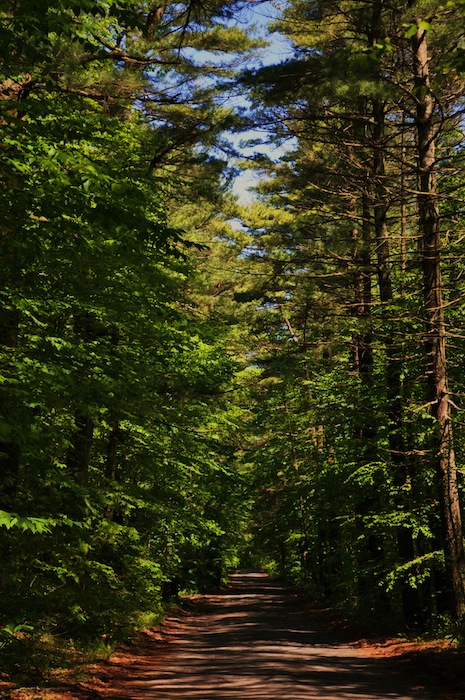
Blossom Road
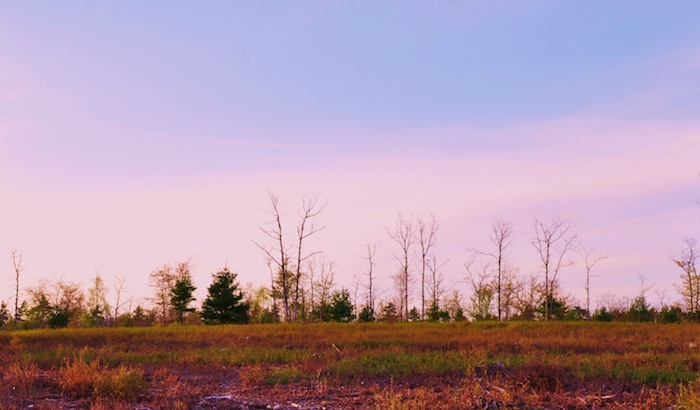
Breakneck Hill
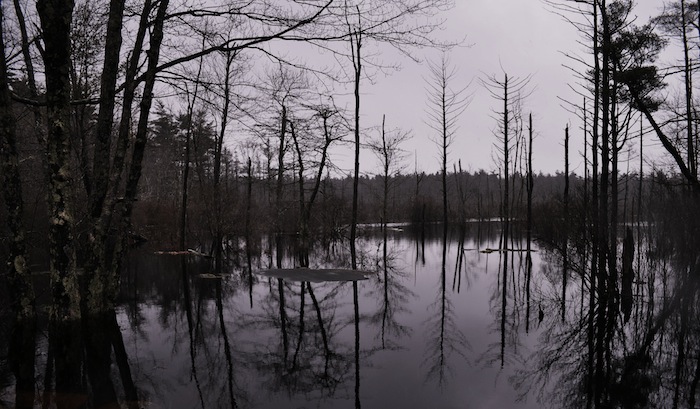
Mill Brook Swamp
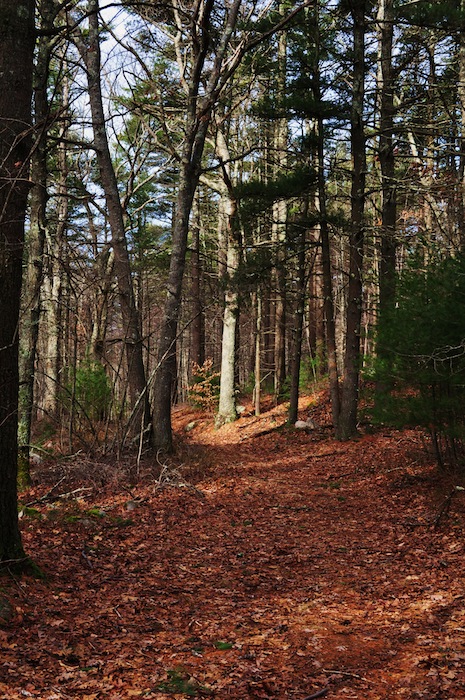
Mowry Path
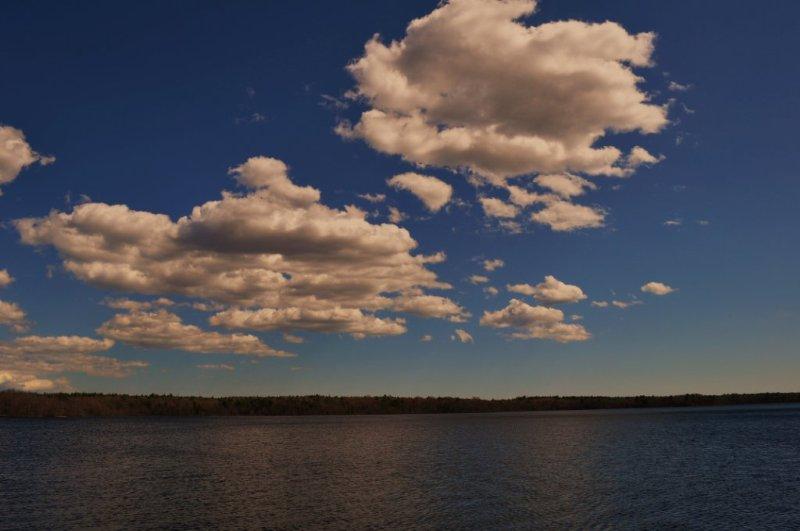
North Watuppa - East Shore
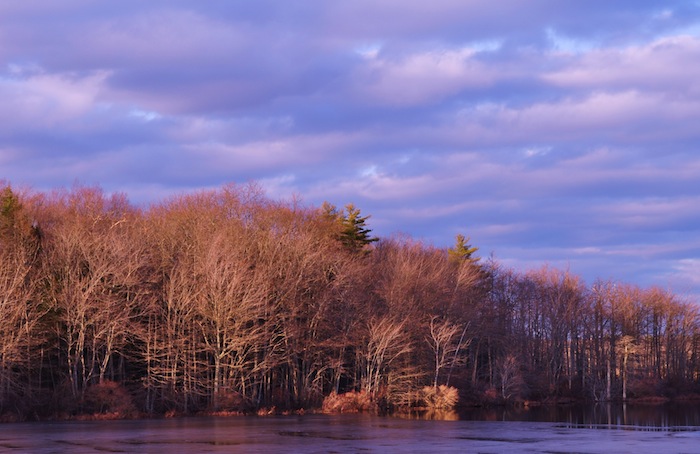
Pond Swamp st sunset
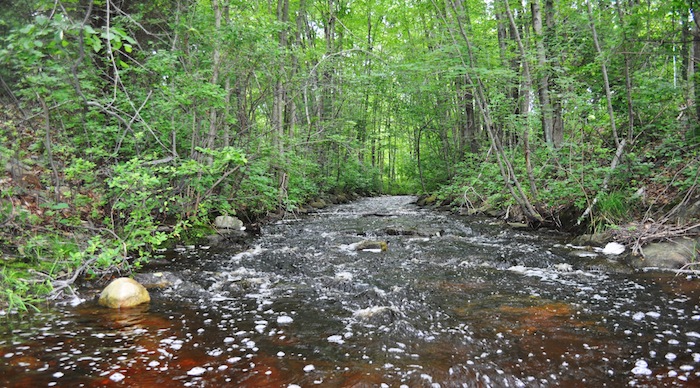
Rattlesnake Brook
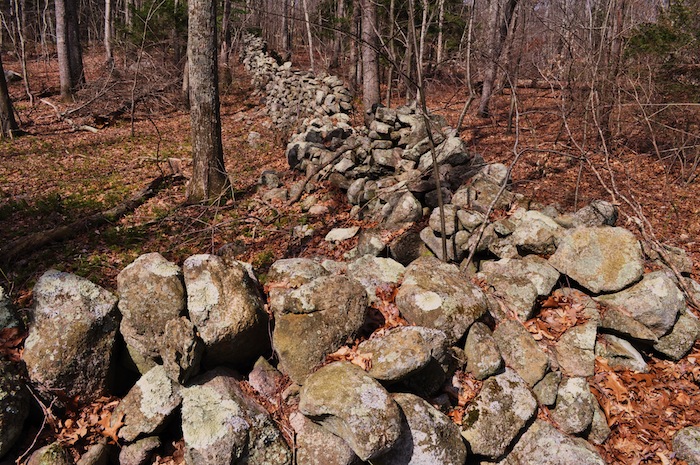
Tattapanum Trail stone wall
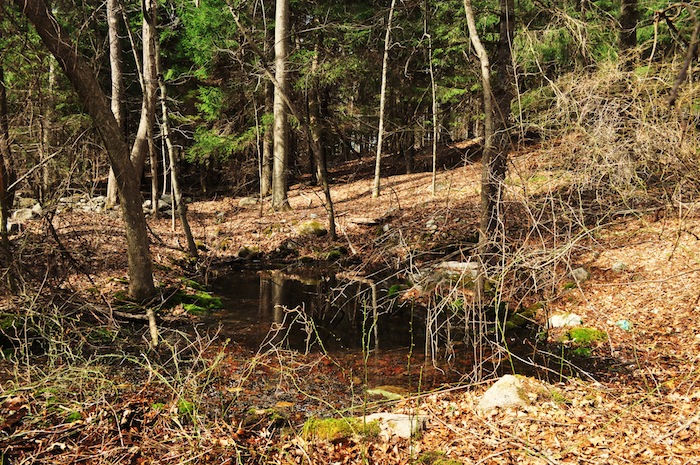
Tattapanum Trail vernal pool
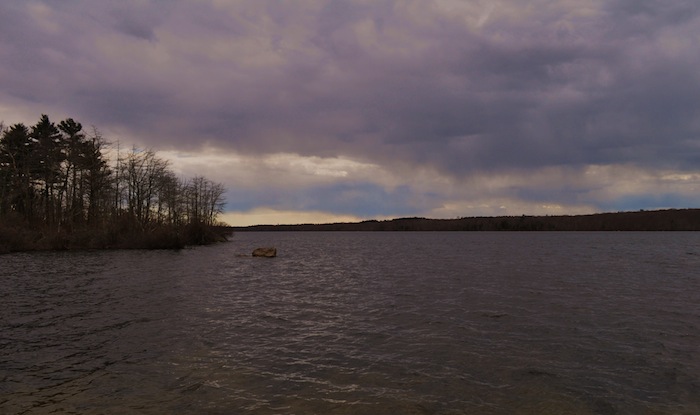
Watuppa Pond storm
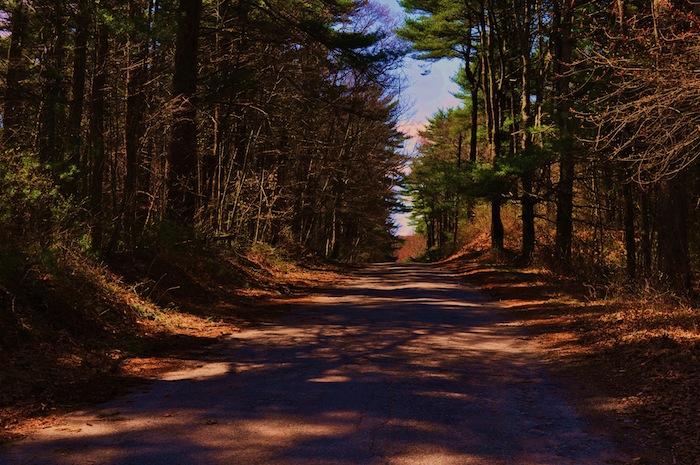
Wilson Road
BIORESERVE FAUNA OF THE MONTH – Red Squirrel (Tamiasciurus hudsonicus)
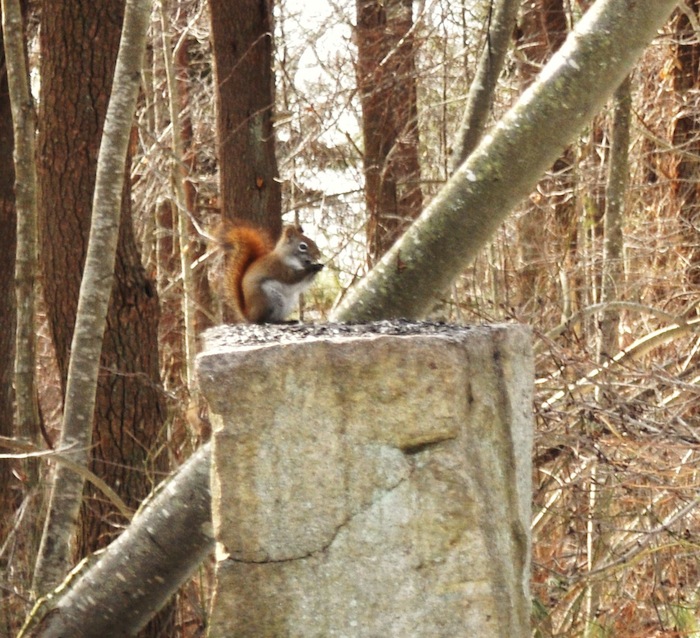
Our Bioreserve red squirrels never had it so good ...and it’s only getting better. With the demise of hundreds of thousands of Bioreserve hardwoods, due to the major alien invasion of winter moths and gypsy moths as well as native forest tent caterpillars and two-lined chestnut borers, almost ten years ago, holes were left in the oak forest canopy. Red squirrel’s favorite tree, eastern white pine, have prospered and filled these holes.
In the SMB red squirrels eat pine seeds, make their nests in pine trees, spend the winter in pine hollows and use the cover of thick pine groves to hide from their enemies. Easy to see why red squirrels are also known as pine squirrels. They also eat the seeds of other pines and conifers and the seeds and buds of some hardwood species. They also gather and eat forest mushrooms and insects and will steal bird eggs if the opportunity presents itself.
During summer and fall red squirrels cache excess food for the upcoming winter in hollow trees, depressions between roots at the base of trees, in hollow logs and within stone walls. Most hikers and forest ramblers are familiar with the shredded remains of hundreds of pine cones found near a red squirrel’s favorite stump or food storage area. Since each squirrel has its own conifer cone midden, counting these middens can give one an idea of how many squirrels occupy a particular area of forest.
Red squirrels also gather and store mushrooms and other fungi. To prevent these perishable food items from molding in storage they first arrange them on tree branches to sun-dry before storing them away.
Like us, these squirrels are diurnal, going about their business and foraging along the forest floor during daylight hours.
Red squirrels average 13 inches in length and are smaller than the common grey squirrel and larger than the striped chipmunks that are commonly found in the same habitat. Males and females are similar in size with red fur coats on their backs and white bellies.
Red squirrels have a wide range. They are found across Canada south of the treeline and in the United States from New England, inland, down the Appalachians and down the coast to Virginia. In the west their range follows the Rocky Mountains down to southern Arizona and New Mexico in the higher elevations.
During winter red squirrels do not hibernate. When winter temperatures are very cold they nest in hollow trees and occasionally within rock piles or underground in a chamber excavated between tree roots. Summer nests are constructed in tall trees with a dense canopy and are made from evergreen needles, dry leaves, moss, shredded bark and grasses. Large summer nests may be utilized year round during mild winters.
Red squirrels see well and are quick to notice intruders in their forest. They make alarm calls when there are predators in the vicinity. Deer hunters, sitting quietly in tree stands or in the woods along a deer run, often have their cover blown by angry red squirrels barking and carrying on about the hunter’s presence in their territory. Red squirrels also chatter, chirp like a bird and trill.
Like the more commonly observed grey squirrels in our city and town parks and yards, mating season begins in early spring when receptive females are chased about by neighboring males. Mating occurs during March and April. Red squirrels have one litter a year of 2 to 4 pink, blind kits. Their eyes open at around one month old. Males do not participate in rearing the young
The kits remain with their mother until late summer when they are chased away to seek their own territory. If food is particularly abundant their mother may allow them to stay the winter. The kits are fully mature and ready to breed when one year old. Red squirrels defend territories ranging in size from 2 to 5 acres.
In the SMB the red squirrels most efficient predator is the fisher, but coyote, red fox, grey fox, long-tailed weasel, red-shouldered hawk, Cooper’s hawk, broad wing hawk, red tail hawk, barred owl, great horned owl and long-eared owl all eat young and adult red squirrels. Eastern milk snakes will search for ground nests containing baby red squirrels.
Easily found and always animated, red squirrels are a great species to stop and observe when out walking and exploring local conifer forests.
BIORESERVE FLORA OF THE MONTH – Blue-Green Elfcup (Chlorociboria aeruginascens)
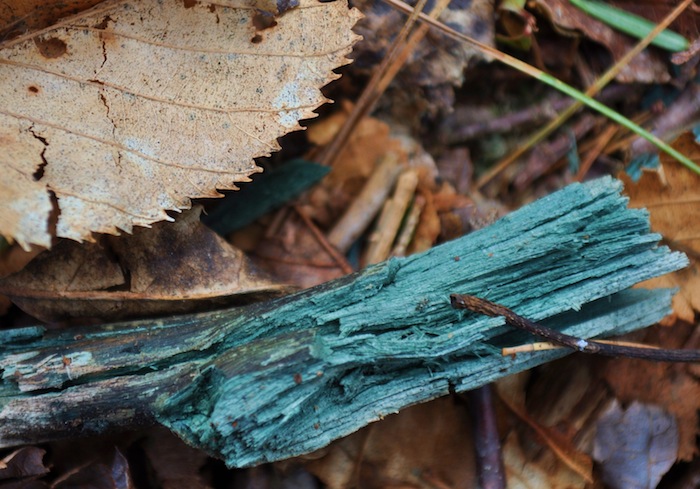
Walking in the SMB or in other area forests one often comes upon pieces of bright, blue-green wood fragments on the forest floor or in the trail that look as if they have been stained or painted. How did these pieces of colorful wood get way out here and who painted them?
A little research reveals that the “artist” responsible for these painted pieces of wood is a fungus, the blue-green elfcup.
The blue-green elfcup lives off decaying woody material in fallen hardwood tree branches, most commonly oak and beech and in the process the elfcup’s mycelium, the vegetative part of a fungus, stains the wood a deep blue-green color. The chemical component, produced by the elfcup mycelium, responsible for the staining is xylindein. Xylindein contains anti-bacterial properties and is presently being studied for its possible medical benefits in treating a number of diseases.
The elfcup’s stained wood is common in the forest and often found, but its fruiting body, which in many other woodland fungi we would call the “mushroom”, is extremely difficult to find.
Although rarely seen, when temperature, rainfall and humidity are exactly right the elfcup shoots up a cup-shaped fruiting body which, when mature, bears the spoors which eventually result in the next generation of elfcups.
The “elfcup” itself is tiny. Large ones are slightly less than a quarter inch in diameter sitting atop a short, less than a quarter inch, stalk.
The richly colored wood resulting from the presence of elfcup has long been used in creating intarsia, an inlaying process using tiny, thin veneers similar to parquetry. There are many examples in art museums dating from the Medieval Period up to the beginnings of the Twentieth Century.
Keep your eyes on the ground and you might spot this interesting fungus on your next woodland ramble.
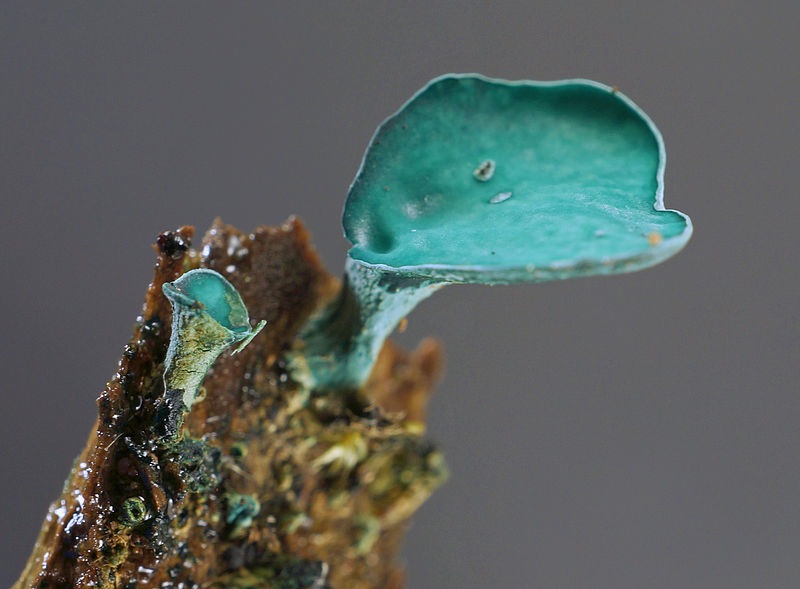
Photo - Chlorociboria aeruginascens-336907 by Sava Kristic under Creative Commons – (CC BY-SA 3.0)

A DIFFERENT KIND OF WALK – June’s Exploring the Southeastern Massachusetts Bioreserve Walk
June's Exploring the Southeastern Massachusetts Bioreserve Walk will be a very early morning walk to spy on our turtle friends laying their eggs. It will be June 7, Saturday. We will meet at 5:30 a.m. at Fighting Rock Corner, intersection of Wilson, Bell Rock and Blossom Roads, Fall River, MA.
Our local turtles usually begin laying their eggs from late May through June. Many start in the evening and finish by early morning. There are 5 species we will be looking for. We may see five or four or three or two or one …or none at all. Only the turtles know.
Approximate length of walk is 1 mile. Walking/hiking shoes and insect repellent are good ideas. Rain cancels walk, drizzle OK.
Here are 3 species we will be watching for:
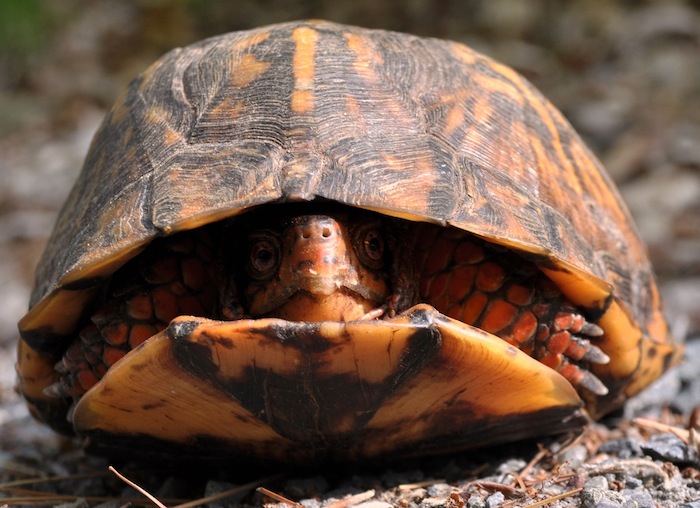
Box Turtle (female)
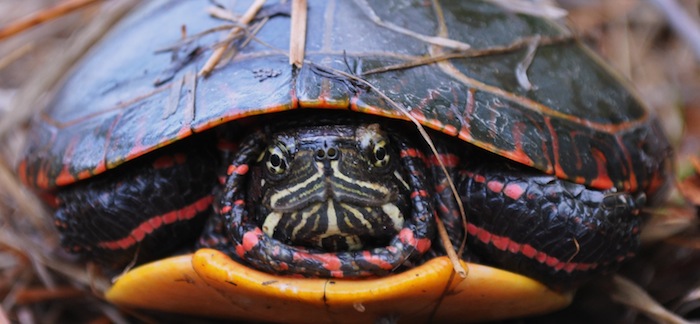
Painted Turtle
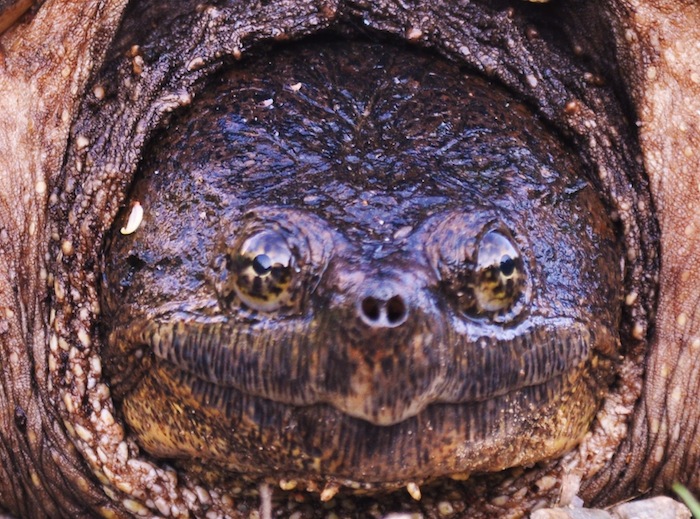
Snapper
ONLY ONE JUNE A YEAR – Enjoy!
In winter I get up at night
And dress by yellow candle-light.
In summer quite the other way
I have to go to bed by day.
~Robert Louis Stevenson
The Summer Solstice, longest day of the year, most daylight, is Saturday, June 21. Summer arrives at 6:51 a.m. Go and grab all of it that you can.
Click on our Calendar for summer things to do.
<Back
Social