Newsletters
April 2014 - City Landfill, Red Maple, Canada Goose
WELCOME TO GREEN FUTURES !
APRIL, 2014
“The price of anything is the amount of life you exchange for it.”
-Henry David Thoreau
“A man’s got to know his limitations.”
- Inspector Harry Callahan (Clint Eastwood, Magnum Force)
DUMP THE DUMP – Those who don’t learn from history, or from anything else for that matter, are doomed to having the largest dump in Massachusetts in their backyard!
Tallest “mountain” in Bristol County, visible from space, will last longer than the Great Pyramid at Giza, Fall River’s legacy to its future generations. The superlatives continue.
Less than stellar city leadership, political hanky-panky, economic challenges and a poorly educated citizenry helped make Fall River the “waste disposal city.”
It is about time that this di-stink-tion ended. Finally …although we’ll believe it when we see it …the available area of Mother Earth, up at the dump site, left to be dumped on, will be full sometime this fall. What is Fall River to do? Oh no! Will we have to find a more responsible way to handle our waste? We’ve never had to do that before. Where can we now dump our trash?
City leaders all know we live in a throw-away consumer society that is unsustainable. Let's begin to change that. To encourage full recycling Fall River should immediately go to pay-as-you-throw. Communities with pay-as-you-throw see significant increases in recycling and huge reductions in the amount of solid waste that has to be disposed of. Responsible and conscientious residents benefit by paying only for what they throw away instead of subsidizing the lazy and uncaring as the present system makes them do now.
Fall River should also declare itself a "Zero Waste City" by 2025 and have its state and federal legislative delegations, bring back to the city, programs and funding for reducing solid waste through producer take-back, diversion and reuse programs.
Fall River should also work toward stopping the construction of what Republic Services says will be a "1,000 ton per day" solid waste transfer station at their dump in the north end of the city. Enough already with Fall River being the ‘trash disposal city” of Massachusetts. Cap the abomination in the city's north end and leave town.
What a struggling city doesn't need is a huge, stinky trash hauling facility, with its attendant truck traffic, in and adjacent to its biotechnology and business districts.
The wheel doesn't have to be re-invented, a major US city, San Francisco, full of triple-deckers and absentee landlords ...has declared itself a “zero waste city” by 2020 and is now at 80% waste recycling, reusing and diverting. Read, here:http://www.huffingtonpost.com/2012/10/08/americas-greenest-city_n_1949160.html
Do we expect to see progressive policies for waste diversion and recycling implemented in Fall River? Do we expect to see pigs fly?
Read this informative article from the March 10th Herald News about a meeting to determine who is responsible for contamination just beyond the dump. http://www.heraldnews.com/article/20140310/NEWS/140319584
We especially find interesting the statement from the Massachusetts Department Enabling Polluters (DEP). “Philip Weinberg, MassDEP regional director, told a crowd of residents and leaders from Fall River and Freetown that, while groundwater contamination was found, the brown water flows under the landfill away from the nearby North Watuppa Pond — the city’s water supply — and does not threaten water wells in Freetown.”
Okay, we are told where the “brown” water is not going. We are told the “brown” water is flowing under the dump away from the water supply and away from water wells. That’s a relief, but where is the destination for that ‘flowing” polluted water? Where is it heading? If it is “flowing,” it is going somewhere.
Check out the photo that’s with the news article. See that line of very serious looking officials wearing their suits and ties? Notice the plastic waste-in-waiting on the table in front of them?
Could that be an indicator that the city’s municipal water supply is less than pristine …and where are those plastic bottles going to end up?
What exactly was this meeting about …again?
MONARCHS REIGN – The King needs our help. Long live the King!
We are losing our monarch butterflies. Both children and adults thrill at the sight of so colorful a creature when one is encountered flitting about the garden flowers on a sunny summer day. And, we marvel that such a fragile and tiny bit of life can fly all the way to Mexico to escape our cold and snowy northern winters.
Sadly, it appears, monarchs may be going the way of the passenger pigeon, heath hen and dodo bird.
How many did you see last summer? We saw very few. http://www.nytimes.com/2014/01/30/us/monarch-butterflies-falter-under-extreme-weather.html?_r=0
If you own or have access and permission to a vacant field or patch of land you might want to try scattering some milkweed seeds. Milkweed is the sole food of the monarch caterpillar.
For a possible milkweed seed source, go here: http://monarchwatch.org/bring-back-the-monarchs/resources/plant-seed-suppliers
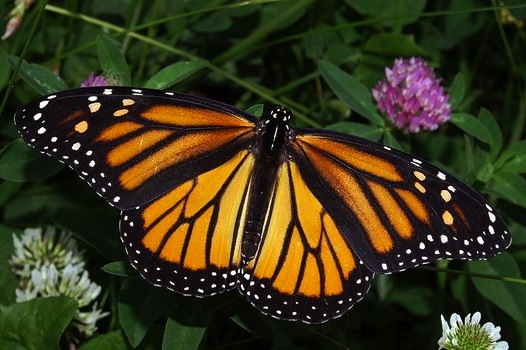
Photo - Wikimedia Commons
Help save the monarch!
BLAST FROM THE PAST – Summer 1993, Volume 1, Number 1
Cleaning out boxes and an old file cabinet we found a few copies of our very first newsletter. At the very beginning of Green Futures, almost before the land was separated from the water, we issued our first newsletter. And, it was run-off on an old duplicating or mimeograph machine. Are you old enough to remember those difficult to use stencils? Where that machine is now, we don’t know … maybe in the Smithsonian?
GREETINGS: Green Futures welcomes all our new members, Now that we are up and running it is more important than ever that we include people with varied backgrounds into our organization. We need folks from throughout Greater Fall River.
We are planning a couple of Green Futures informational/organizational meetings and also in the works is a Green Futures sponsored environmental political forum.
Please set the evening of July 22 aside for the first of these meetings at St. John’s Club, 1365 Rodman Street, Fall River, Massachusetts. It is important that you be there and bring your friends and neighbors too.
And,
SAVE THE FREETOWN STATE FOREST: Short sighted development interests are still attempting to take part of the state forest. We need more citizen outrage directed at D.E.M., Secretary Coxe of E.O.E.A. and Governor Weld “our environmental governor.”
And,
Green Futures Meets His Honor: We had a meeting with Mayor John Mitchell. The focus was on the land-grab issue, but other topics discussed were the city incinerator, c.s.o. construction project, ill-conceived development and lack of effective city planning.
For those who have been involved from the get-go, please stay involved. We couldn’t have had the successes we have had without you.
BIORESERVE FLORA OF THE MONTH – Red Maple (Acer rubrum)
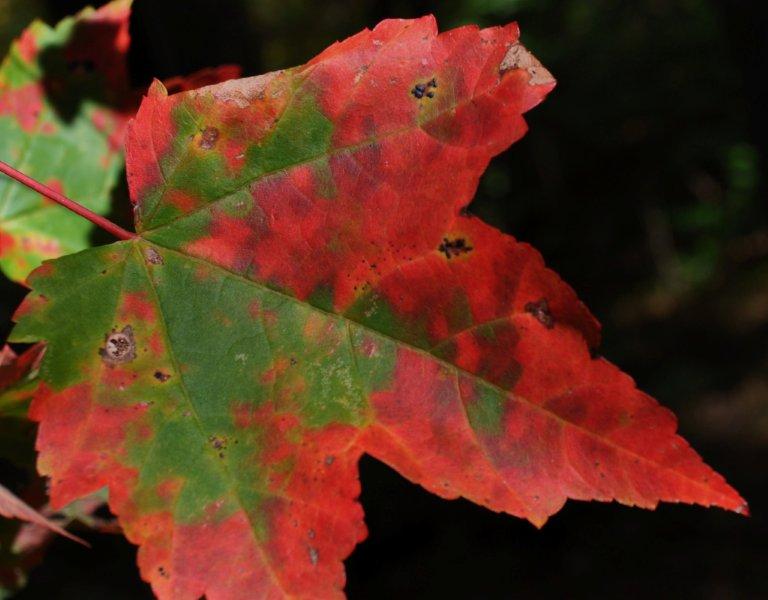
Mention maple tree in New England and most folks immediately think …sugar maple! Sugar maples, however, are not our most common maple. In southeastern New England sugar maples in area woodlands are few and far between.
In our neck of the woods red maple is the most abundant of the native maple species. Growing best in well-drained, moist soil, red maple isn’t particular and can also grow in drier upland locations and in swamps. It is found growing in pure stands, but also in mixed stands of gray birch, black cherry, various oaks and other maple species.
Abundant and widespread, red maple is found from Nova Scotia and New Brunswick south to Florida and west to eastern Texas and Oklahoma, north to Wisconsin, Minnesota and southern Ontario.
Although usually 50 to 60 feet in height, red maple growing under ideal conditions can reach a height of 80 to 100 feet with a trunk more than 5 feet in diameter. The largest living red maple is reportedly 125 feet in height and still growing in Michigan.
This maple has typical maple shaped leaves, each 3 to 5 inch leaf usually having 3 lobes with many small teeth along the leaf margin. Sugar maple leaves are not finely toothed and are not as compact as red maple leaves. The leaves are opposite and the leaf stems, newly formed twigs, buds, flowers and fruits are red. The leaves turn a deep red in autumn.
The small bright red flowers, each with five small petals, are either male or female appearing in separate, dense clusters. Red maple is one of the first plants to flower in spring, opening in early spring before the leaves emerge. Maple fruits are called samaras. A samara consists of a winged husk containing a single seed. Most maples bear paired samaras which drop from the tree and spin down to the ground when ripe.
Like the sugar maple the red maple is commonly tapped for sap to make maple sugar and syrup.
Young red maples have smooth, light gray bark. Older trees have bark with gray to black ridges and in the oldest red maples bark ridges flatten into narrow scaly plates.
Young maple shoots are on the menu of many forest mammals. Maple seedlings and especially stump sprouts are browsed by white tail deer, most heavily in the winter. Moose, snowshoe hares, cottontail rabbits, voles and mice also feed on the buds, foliage and bark.
BIORESERVE FAUNA OF THE MONTH – Canada Goose (Branta Canadensis)
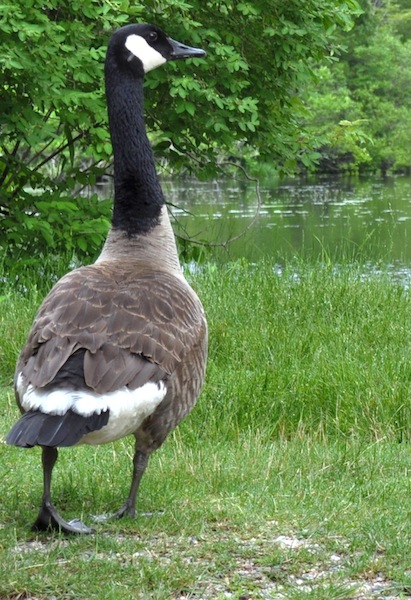
“Honk, honk, honk, honk, honk!”
Who is doing all that honking? Is it coming from that impatient driver behind you on a busy highway? Nope! It is coming from that flock of Canada geese grazing on the grass along the shoulder of the road you are driving on.
The Canada goose has become a permanent resident in southeastern New England although there are still flocks from the arctic that pass overhead or stop and mix with the locals while on their seasonal journey south in the fall and north in the spring.
Although Canada geese are famous for flying in distinctive V-pattern formations, many species of geese, ducks and other waterfowl do the same when flying long distances. When flying the V pattern the lead bird works the hardest. When tired, the lead bird falls back and the one of the following birds takes over the lead.
When migrating these geese will fly day and night and for as long as 18 to 20 hours. Under ideal weather conditions and with a tail wind they can travel at 70 miles an hour at an altitude of up to 5,000 to 10,000 feet and cover as much as 1,000 miles non-stop.
The Canada goose, often incorrectly called “Canadian” goose by the unknowing, is found throughout just about all of North America. They have also been introduced into England and the northwestern European countries.
Originally Canada Geese nested only in Canada and in the mid and far western United States. Over the past fifty years, through trap and transfer programs, many states now have resident non-migratory flocks, some of which have reached nuisance levels.
These very adaptable geese are now found nesting in rural, suburban and urban areas throughout the United States. Not strictly seasonal anymore, we now have Canada geese living with us year round.
Like horses and cows, geese are predominately grazers. Their diet includes a wide variety of aquatic and terrestrial grasses and other tender young vegetation as well as the worms, insects, and other arthropods they encounter while grazing. Farmed as well as wild grains are also eaten when available.
Canada geese mate in the spring accompanied by much honking and aerial chasing of potential mates by two year old ganders. Canada geese do not mate until they are two years old. Older, mated pairs are monogamous. The loss of a mate may result in a missed breeding year, but the surviving goose will eventually find a new mate.
The goose (a male is a gander, female is a goose) lays from two to a dozen eggs in a bowl shaped nest lined with down the goose plucks from her breast. The nest is on the ground or a raised hummock near water. Both birds may incubate the eggs although the goose is the one usually incubating while the gander stands or floats nearby ready to puff himself up and hiss at …and then attack with flailing wings and toothless bites, anyone, including humans, coming near his nest, eggs and mate.
After three weeks of incubation the eggs hatch and once the new goslings are dried and their down fluffed-up their parents lead them to the nearest body of water.
Adult geese also molt their flight feathers at this time and all, adults and young, stay on the water for the next month until their new flight feathers grow in. Except for the occasional gosling or young goose pulled underwater by a foraging snapping turtle, there are far fewer predators for a flightless goose on the water than on land.
The goslings fledge a few weeks after their parents acquire their new flight feathers. They may associate with other goose families and all will stay together until the following spring before the now mature goslings decide to leave their parents.
A full grown goose may only weigh 6 to 12 pounds, but when standing erect, puffed-up and with wings flailing, there are few predators that will chance an attack.
Locally, bald eagles and coyotes are large enough to make a dinner out of the most aggressive goose. Other predators that will take eggs, young, injured or unaware geese include red foxes, grey foxes, fishers, raccoons, opossums, weasels, striped skunks, great black backed gulls, ravens, crows, great horned owls, snowy owls, peregrine falcons, rough legged hawks, red tailed hawks and snapping turtles. We humans also find Canada geese tasty.
Honk, honk, honk!
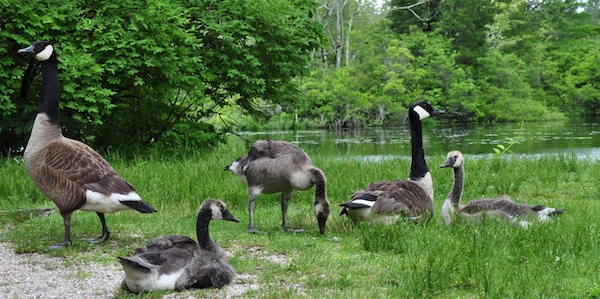
Here Comes the Sun – Spring is here!
Crocuses, snow drops and grape hyacinths are up in yards and gardens and forsythia shrubs are about to bloom. In the forest the shy skunk cabbage flowers are attracting early spring insects to spread their pollen and the small yellow spicebush flower buds are opening. Here comes the sun, https://www.youtube.com/watch?v=xfMWJi4req4
Click on our April calendar to see what’s spring available.
Al Lima's Taunton Heritage River Guide and the Taunton River Heritage Coloring Book
The Guide is now up in its entirety! Go to Current Projects and click on the link. Enjoy!
Also, the Coloring Book will be moving to our Just For Fun! section. What a perfect end-of-school-year or summer project!
<Back
Social